
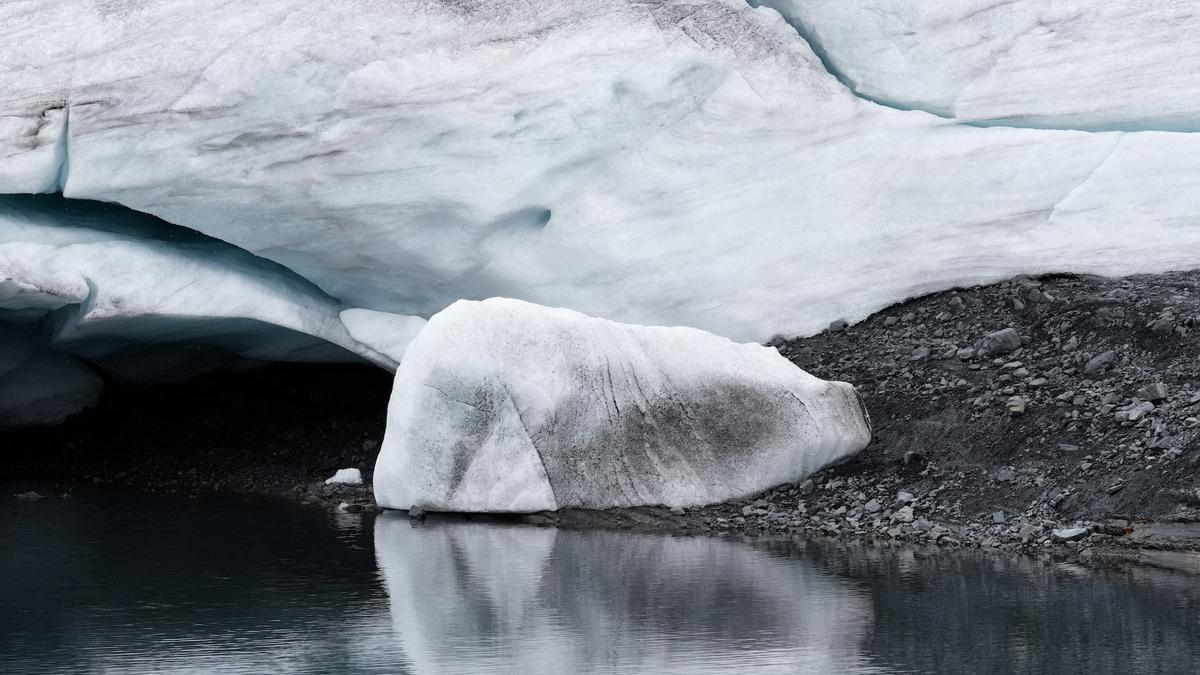
Mon Mar 24 23:30:00 UTC 2025: ## Global Glaciers Disappearing at Unprecedented Rate, Warns UNESCO Report
**Geneva, Switzerland** – A new UNESCO report reveals a catastrophic acceleration in the melting of glaciers worldwide, with the past three years marking the highest ice loss ever recorded. The report, released on March 21st and coinciding with the first World Day for Glaciers, highlights the alarming loss of approximately 9,000 gigatonnes of ice since 1975 – a volume comparable to a 25-meter-thick ice block the size of Germany.
This dramatic melt, affecting regions from the Arctic to the Alps and the Tibetan Plateau, is directly linked to climate change fueled by fossil fuel combustion. The report warns that this trend is set to worsen, exacerbating economic, environmental, and social issues globally. Rising sea levels and dwindling freshwater sources pose significant threats.
The report details that glaciers lost 450 gigatonnes of mass in 2024 alone, making them a major contributor to rising sea levels. This poses a direct threat to millions through devastating floods and disruption of water resources crucial for hydroelectric power and agriculture. The roughly 275,000 remaining glaciers, alongside the Antarctic and Greenland ice sheets, represent about 70% of the world’s freshwater.
The impact on the 1.1 billion people living in mountain communities is particularly severe. They face increased risks from natural hazards and unreliable water supplies, compounded by the remoteness and challenging terrain of many glacier regions. The report anticipates worsening droughts in areas dependent on snowpack, and a rise in the frequency and severity of avalanches, landslides, flash floods, and glacial lake outburst floods (GLOFs).
Experts express deep concern, with glaciologist Heidi Sevestre describing the observed changes as “heartbreaking” and noting that the melt is occurring faster than anticipated in some regions, such as the Rwenzori Mountains in East Africa, where glaciers are projected to vanish by 2030. The report also highlights the social consequences, such as increased local conflicts over water in East Africa due to glacial melt. While the impact on global sea levels from mountain glaciers is currently about 1 mm per year (18 mm since 2000), this seemingly small increase exposes hundreds of thousands to annual flooding.
The report concludes with a stark warning: billions of people are connected to glaciers, and their protection requires global action. The UNESCO summit in Paris calls for immediate and concerted efforts to address this critical issue.
 First Piper