
Thu Mar 20 00:00:00 UTC 2025: ## Sun’s Opacity Mystery Solved: New Research Resolves Decades-Long Discrepancy in Solar Models
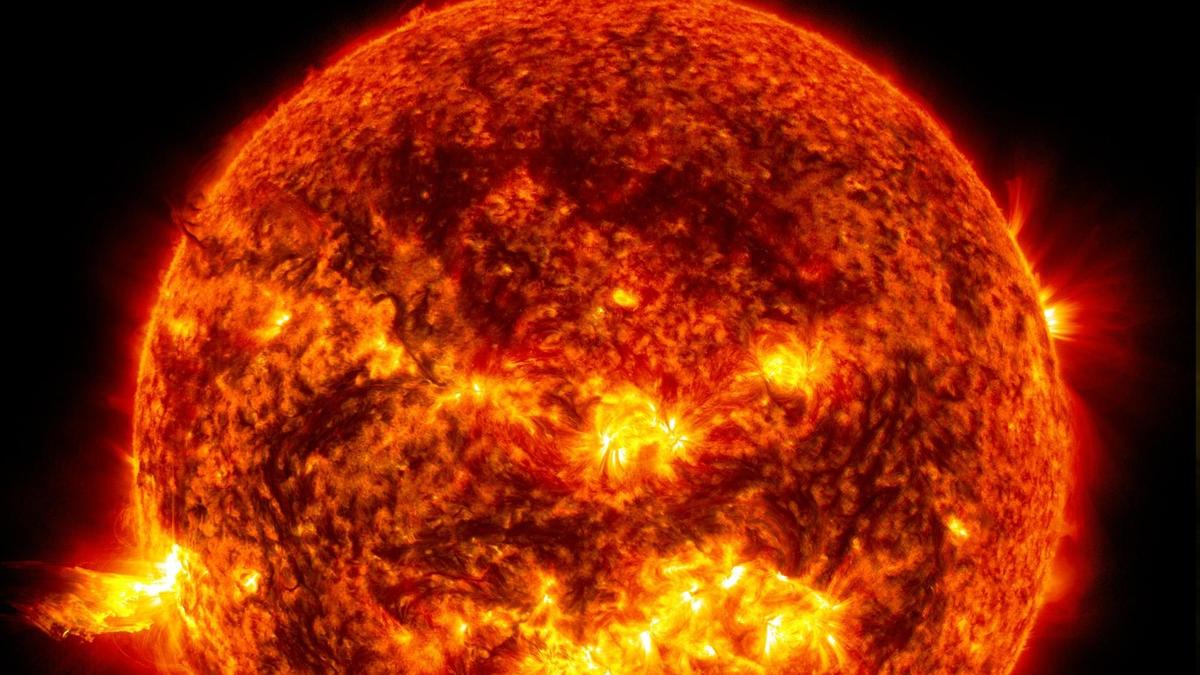
**March 20, 2025** – A long-standing discrepancy between theoretical models of the sun and observed data has finally been resolved, thanks to a groundbreaking study published in *Physical Review Letters*. For decades, solar models have underestimated the opacity of iron within the sun’s interior, leading to significant differences in predicted versus observed properties. This impacted the accuracy of models used to understand not only the sun, but also the formation and evolution of stars and galaxies across the universe.
The problem stemmed from the sun’s surprisingly high opacity—its ability to absorb light. While the opacity of iron in everyday objects is well-understood, its behavior under the extreme conditions within the sun’s core has proven challenging to model accurately. Early studies suggested the discrepancy could be due to errors in measuring elemental abundance in the sun. However, later research indicated that the models themselves were inaccurate, underestimating iron’s opacity by a significant margin (30-400%).
Researchers at Sandia National Laboratories, using a novel experimental setup, directly measured iron’s opacity under sun-like conditions for the first time. By exposing a thin iron sample to X-rays and employing ultrafast X-ray cameras and spectrometers, the team precisely tracked the absorption of radiation, overcoming significant technological hurdles to achieve sun-like conditions within the laboratory.
This research definitively showed that the discrepancy was not due to errors in data measurement, but rather an incomplete understanding of iron’s opacity under extreme conditions. While the study provides a crucial step forward, further research is needed to refine the models and fully resolve all outstanding uncertainties. This breakthrough paves the way for more accurate simulations of stellar evolution and a deeper understanding of the universe’s formation.
 First Piper