
Mon Mar 10 03:00:00 UTC 2025: ## Tamil Nadu Protests Three-Language Policy in Heated Language Debate
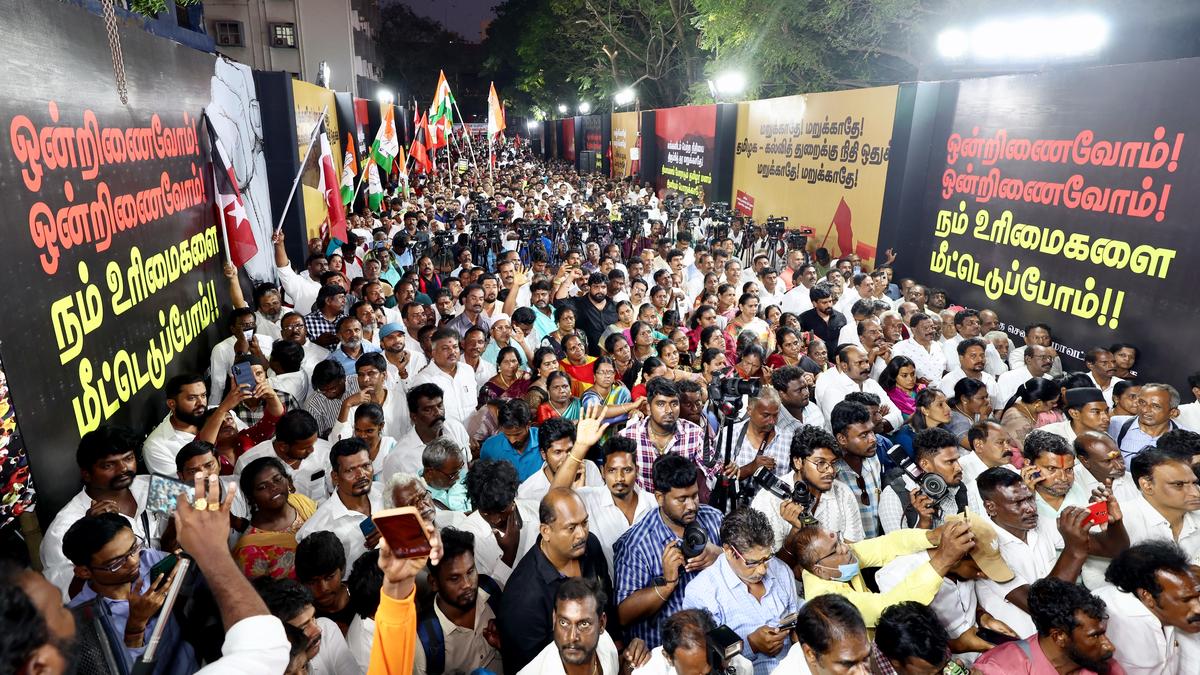
**Chennai, March 10, 2025** – A DMK-led coalition staged a protest in Chennai on February 18th against the three-language policy mandated by the National Education Policy (NEP) 2020, reigniting a long-standing debate over language education in India.
The NEP 2020, implemented after five years of consultation, advocates for mother tongue instruction until at least Grade 5, preferably until Grade 8, in both public and private schools. While encouraging bilingualism (mother tongue and English), the policy also introduces a flexible three-language formula, aiming to avoid imposing languages on any state. However, the policy’s emphasis on Sanskrit and other classical languages has sparked controversy.
The policy’s implementation has faced challenges. While the NEP provides for the inclusion of foreign languages at the secondary level, a lack of teachers and resources hinders the effective implementation of multilingual education in many states. For instance, Tamil, once offered as a second language in Haryana, was discontinued due to a lack of speakers. Similar difficulties are encountered in Himachal Pradesh with Telugu and Tamil.
The eighth All India School Education Survey (AISES) reveals a decline in the number of schools using mother tongues as the medium of instruction, highlighting a growing urban-rural divide. Although the NEP aims to promote mother tongue education through the provision of high-quality textbooks in various regional languages by the NCERT, the effective translation and dissemination of these materials remain a significant hurdle. While some states like Assam and Andhra Pradesh have made progress by introducing bilingual textbooks, consistent nationwide implementation remains elusive.
The NEP 2020’s three-language formula differs significantly from the 1968 policy, creating a complex situation for states navigating the balance between promoting linguistic diversity and ensuring effective education. The ongoing protests in Tamil Nadu underscore the deep-seated concerns and challenges associated with implementing the policy nationwide.
 First Piper