
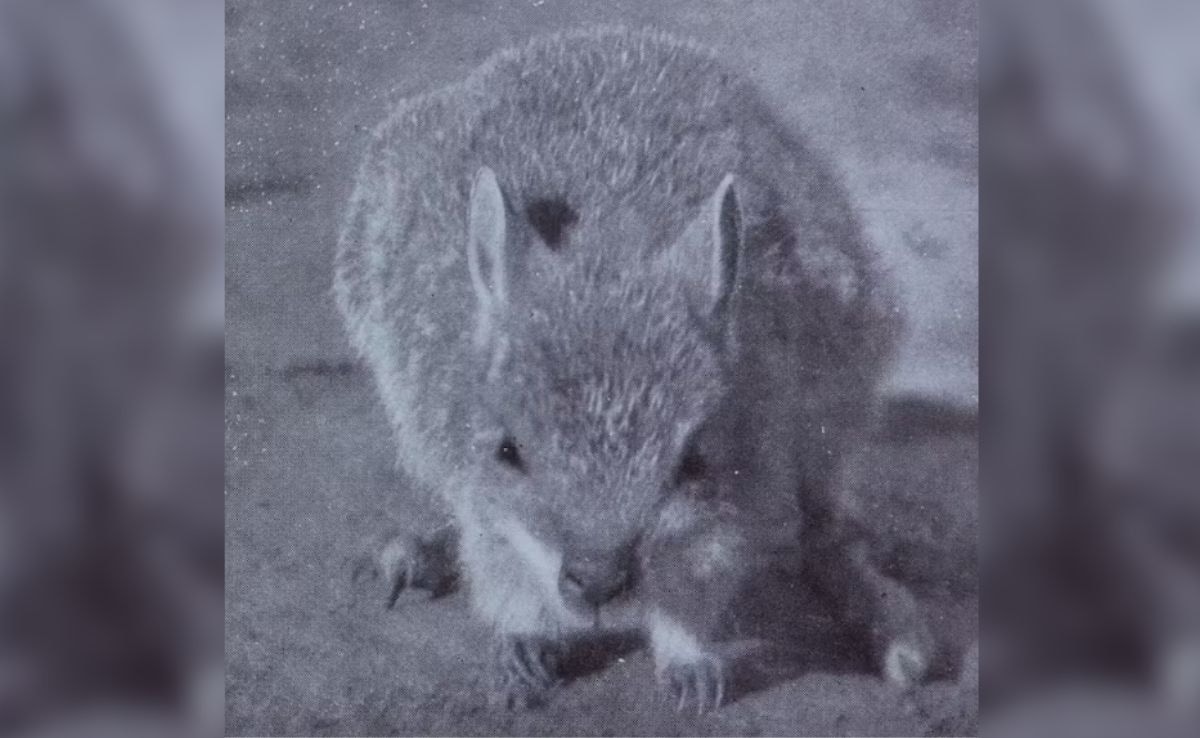
Thu Feb 27 07:51:44 UTC 2025: ## Extinct? New Research Sheds Light on the Elusive Desert Rat-Kangaroo’s Diet
**Adelaide, Australia** – A new study published in the *Journal of Experimental Biology* offers fresh insight into the diet of the desert rat-kangaroo (*Caloprymnus campestris*), a tiny marsupial believed to be extinct for 30 years. The research, led by Rex Mitchell (Flinders University), Karl Vernes (University of New England), and Vera Weisbecker (Flinders University), challenges previous assumptions about the animal’s ability to consume tough foods.
Using finite element analysis, the researchers determined that the rat-kangaroo’s bite strength was likely less powerful than previously thought, due to its small size. While its skull is robust, its relatively small size compared to similar species limits its ability to eat hard foods like roots and nuts. The analysis suggests its diet likely consisted primarily of softer materials such as leaves and insects, a more delicate dietary preference than previously believed.
This finding is crucial in the ongoing search for the animal, officially declared extinct in 1994. Sporadic sightings and descriptions of its unique compact size and hopping gait have fueled hopes of its continued existence. Understanding its dietary needs helps narrow the search to areas containing suitable, softer vegetation.
Previous research had underestimated the impact of the rat-kangaroo’s small size on its bite force. The new study corrects this, providing crucial information for ongoing search efforts, which include expeditions, camera trapping, analysis of predator scat, genetic testing, and collaboration with Traditional Owners. Although no definitive proof of survival has been found, the researchers highlight the possibility of the rat-kangaroo being a “Lazarus species”—an animal previously thought extinct but later rediscovered. The harsh, unforgiving environment of its habitat makes it plausible that the small, nocturnal animal might remain undetected. The team’s work emphasizes that extinction declarations aren’t always final and that continued research, guided by new insights like these, could yet lead to a surprising rediscovery.
 First Piper