
Thu Feb 27 06:51:49 UTC 2025: ## NASA’s Lunar Trailblazer Launches to Map Lunar Water
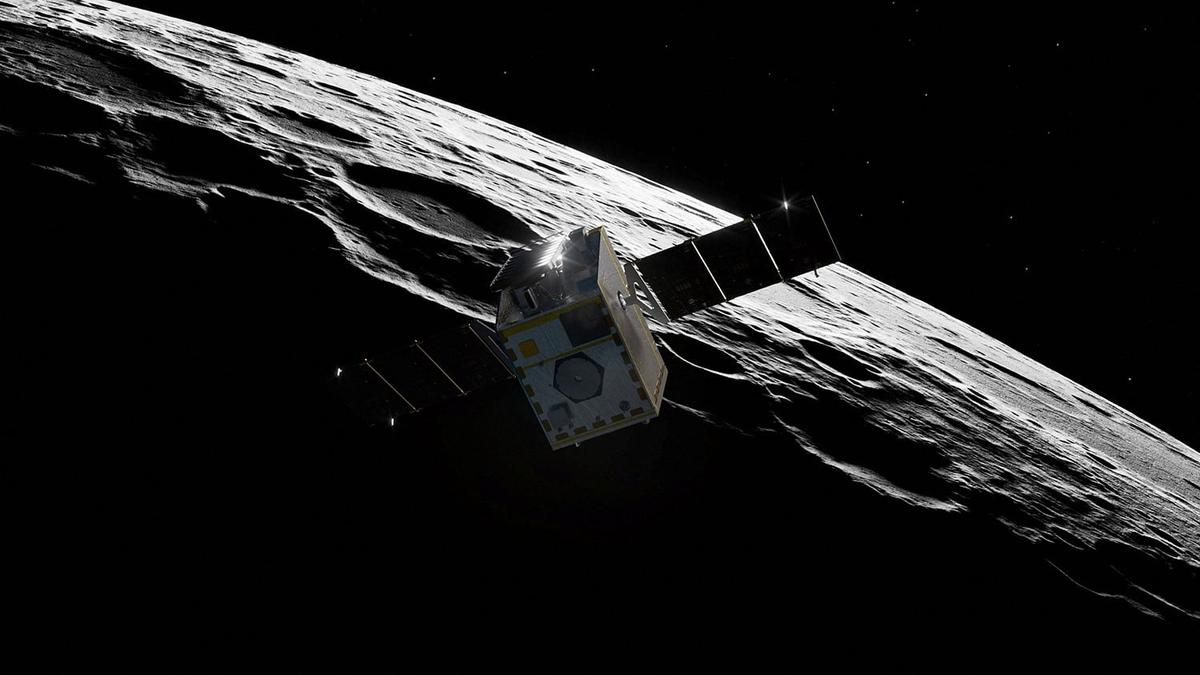
**Cape Canaveral, FL –** A dishwasher-sized satellite, NASA’s Lunar Trailblazer, embarked on a mission Wednesday to map the distribution of water ice on the moon. Launched aboard a SpaceX Falcon 9 rocket from the Kennedy Space Center, the orbiter will play a crucial role in future lunar exploration.
The $50 million satellite, built by Lockheed Martin, is equipped with two instruments: the Lunar Thermal Mapper (LTM) to measure surface temperature and the High-resolution Volatiles and Minerals Moon Mapper (HVM3) to detect water signatures. These instruments will work together to understand the lunar water cycle, focusing on permanently shadowed craters at the poles where significant ice deposits are hypothesized. This water could be vital for future lunar bases, providing drinking water, oxygen, and rocket fuel.
Principal investigator Bethany Ehlmann of Caltech highlighted the significance of identifying these resources for future human missions, stating that understanding water distribution will inform the planning of rover routes and astronaut landing sites.
The mission will involve a series of moon flybys and orbital maneuvers over several months before settling into a 100km orbit. The data collected will provide high-resolution images, revealing the form, distribution, and abundance of water on the lunar surface.
While small amounts of water have been detected in sunlit areas, the focus remains on the potential vast reserves in permanently shadowed regions. Scientists believe that the water’s origin could be from solar wind reactions with lunar minerals, or from comets and meteorites over billions of years. The total amount remains uncertain but is estimated to be in the hundreds of millions of tons. Beyond its practical use, studying lunar water also provides insights into the origin of water on Earth. The mission’s success will significantly advance our understanding of the moon and pave the way for sustainable human presence on its surface.
 First Piper