
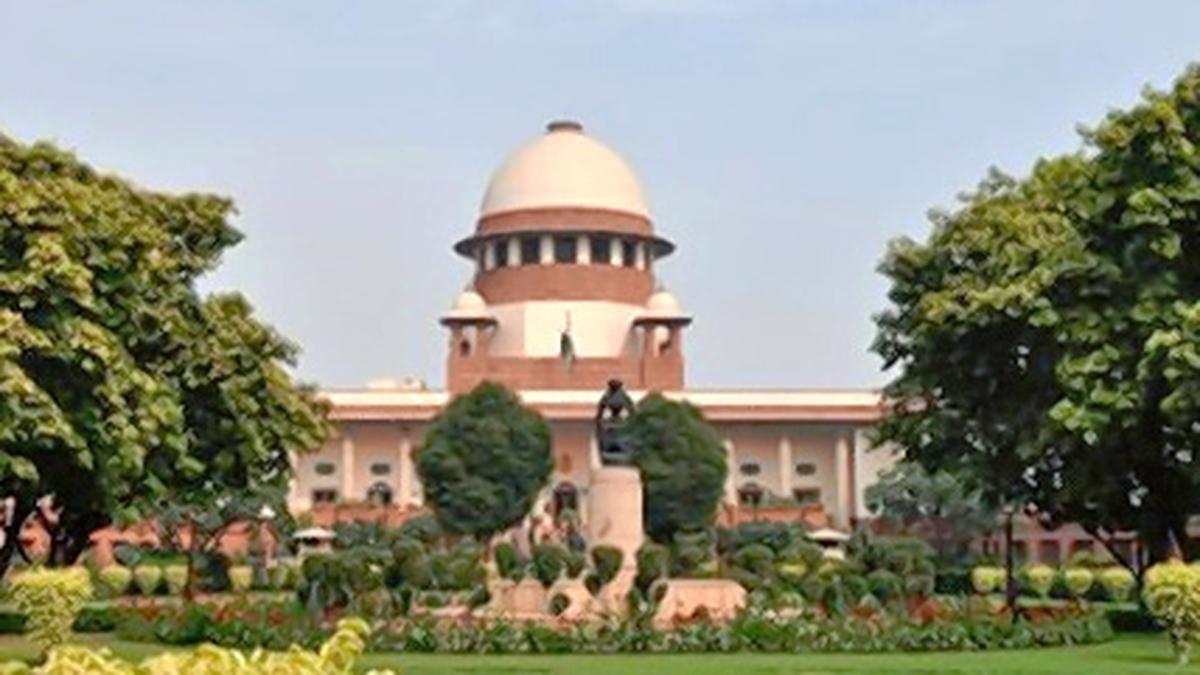
Tue Feb 25 11:33:34 UTC 2025: ## Assam Government Defends Police Encounter Record Before Supreme Court
**New Delhi, February 25, 2025** – The Assam government on Tuesday vehemently opposed a public interest petition alleging violations of a 2014 Supreme Court judgment regarding police encounters. The petition, filed by Arif Md. Yeasin Jwaedder and represented by advocate Prashant Bhushan, claims that 171 police encounters in Assam between May 2021 and August 2022 violated the guidelines established in the *People’s Union of Civil Liberties (PUCL) versus State of Maharashtra* case. These guidelines mandate independent investigations into all police encounter deaths, regardless of the victim’s status.
Solicitor General Tushar Mehta, representing Assam, argued that the state had adhered strictly to the PUCL judgment. He highlighted that the judgment emphasizes the need for impartial investigations to maintain public trust in law enforcement, regardless of whether the victim or aggressor was a civilian or a militant.
However, Bhushan countered that the Assam government had “rampantly violated” the 16 guidelines set forth in the PUCL judgment. He cited instances where FIRs were filed against victims rather than the police officers involved, and highlighted victims’ statements alleging being shot in the legs by an “encounter specialist,” suggesting a pattern of abuse. He requested an independent investigation led by a retired Supreme Court or High Court judge.
Mehta argued that the guidelines require complaints to come from the victims’ families, not third parties like the petitioner. Bhushan responded that the families were too fearful to come forward, requiring considerable persuasion to obtain even limited statements. The Solicitor General also emphasized the significant losses suffered by Assam police and central forces in combating terrorism and narcotics smuggling, citing the surrender of over 11,200 terrorists and substantial arms seizures in 2024.
Justice Surya Kant clarified that the PUCL judgment aims to provide an impartial review, exonerating police if allegations are false, while holding them accountable if the victims’ claims are substantiated. The court reserved its judgment. On February 4th, the Supreme Court had stated it would not assess the merits of the alleged encounters but would only determine whether its guidelines had been followed.
 First Piper