
Mon Feb 24 00:00:00 UTC 2025: ## India’s Chandrayaan-3 Mission Yields First Detailed Geological Map of Moon’s South Pole
**Bengaluru, India (February 24, 2025)** – A landmark geological map of the moon’s south polar region, created using data from India’s Chandrayaan-3 mission, has been published, revealing new insights into the moon’s formation and evolution. The map, published in *Advances in Space Research*, was compiled by researchers from the Physical Research Laboratory (PRL), Panjab University, and ISRO.
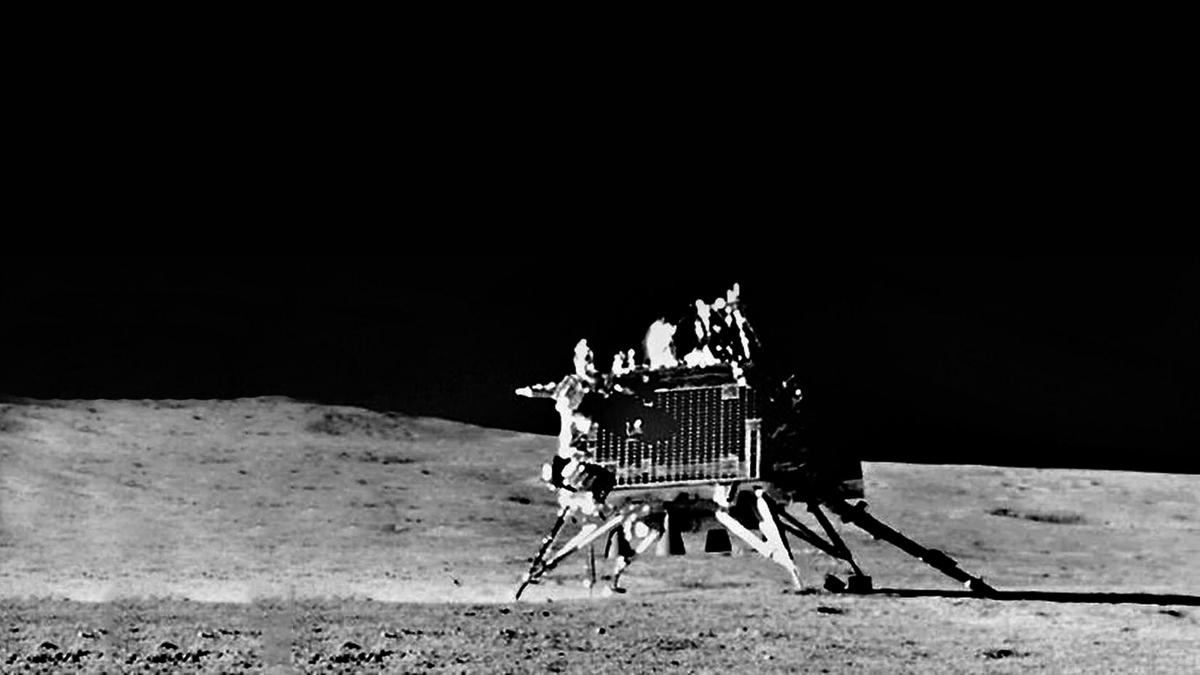
The map, based on data collected by the Pragyan rover, depicts an undulating landscape of highlands and plains near the Vikram lander’s landing site. Analysis of secondary craters pinpointed the Schomberger crater as the primary source of debris in the area, estimating the region’s age to be approximately 3.7 billion years old – roughly coinciding with the emergence of early microbial life on Earth.
Chandrayaan-3’s data has confirmed the existence of a vast, subsurface ocean of primordial magma, extending across the entire moon. While previous missions hinted at this, Chandrayaan-3’s high-latitude landing provided the crucial data to confirm its extent. The map’s findings further support the theory that the Earth and moon share similar evolutionary trajectories, originating from the same primordial cloud of molten material.
The study highlights the scientific significance of lunar craters as “time capsules” preserving the history of early solar system impacts, offering valuable data for understanding planetary evolution. However, the increasing activity on the moon, with plans for colonization and resource extraction, raises concerns about the preservation of this unique environment. The article emphasizes the urgent need for an international legal framework to regulate future lunar activities and prevent contamination of the pristine lunar surface.
 First Piper