
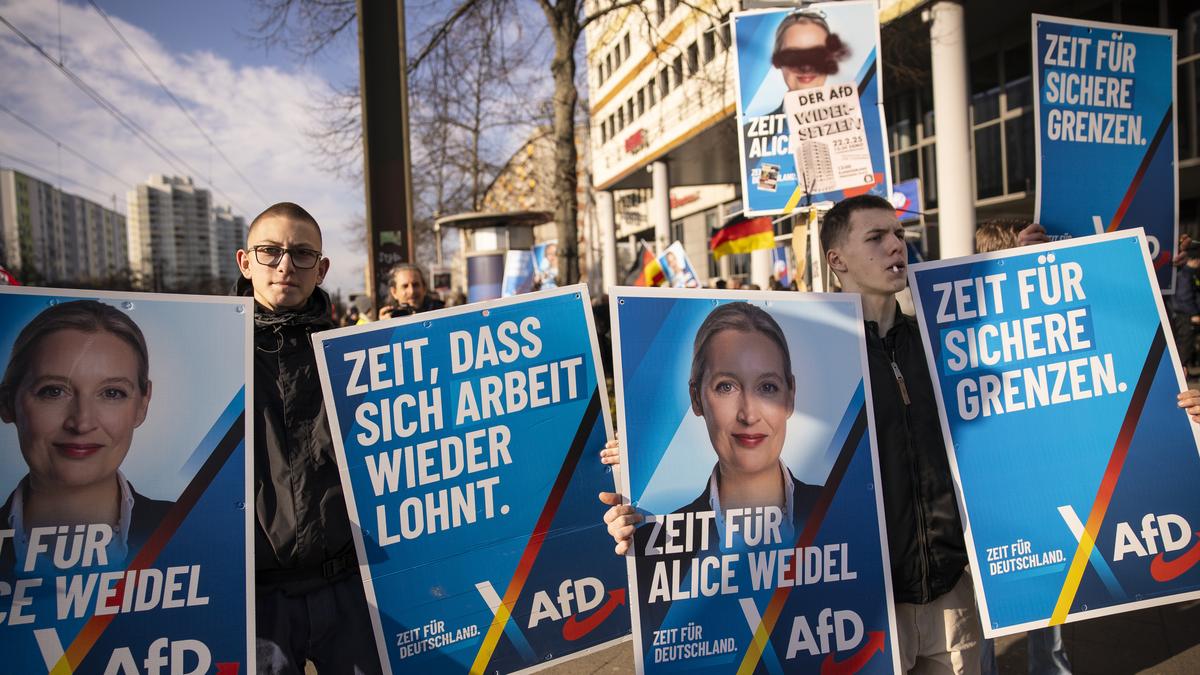
Sun Feb 23 09:39:22 UTC 2025: ## Far-Right AfD Gains Momentum in Germany’s Upcoming Election
**Berlin, Germany –** With Germany’s federal elections looming, the far-right Alternative for Germany (AfD) is experiencing a surge in popularity, polling around 20% and causing significant unease among mainstream parties. This rise coincides with a complex confluence of factors impacting the German electorate.
Recent attacks by refugees have shifted the focus of the campaign to immigration, a key AfD talking point. The party has capitalized on public anxieties, leveraging social media to disseminate its anti-immigrant message and normalize extreme views, a strategy that has been remarkably effective.
The stagnant German economy, burdened by the global slowdown, rising energy prices (up 111% since 2019), and a struggling auto sector, further fuels the AfD’s appeal. Concerns about potential trade wars and the impact of a new tariff regime also contribute to economic uncertainty, playing into the AfD’s nationalist narrative.
The ongoing war in Ukraine presents another challenge. Speculation about a potential U.S.-Russia deal to end the conflict, coupled with statements suggesting Ukraine’s NATO membership is unrealistic, has raised concerns about European security and the need for increased defense spending. This could necessitate breaking Germany’s strict debt limit, further straining the economy.
Mainstream parties, particularly the CDU, are grappling with the AfD’s rise. Recent actions, such as CDU candidate Friedrich Merz’s motion for stricter immigration policies (passed with AfD support), expose divisions within the CDU and demonstrate the pressure to adopt more nationalist stances to counter the AfD’s influence.
The AfD’s platform offers seemingly simple solutions: prioritizing German interests, improving relations with Russia, and restricting immigration. While these proposals resonate with a growing segment of the population, they risk jeopardizing Germany’s role in European integration and its commitment to international cooperation.
The AfD’s growing legitimacy, fueled by endorsements from figures like U.S. Vice President J.D. Vance, who criticized European leaders for their handling of the AfD, raises serious concerns about the future of German politics and its place within the European Union. The party’s potential success is viewed as a significant threat to the established political order and Germany’s role in maintaining peace and stability in Europe.
 First Piper