
Sun Feb 23 13:40:00 UTC 2025: ## Snap Election Shakes Up German Politics as Far-Right Gains Ground
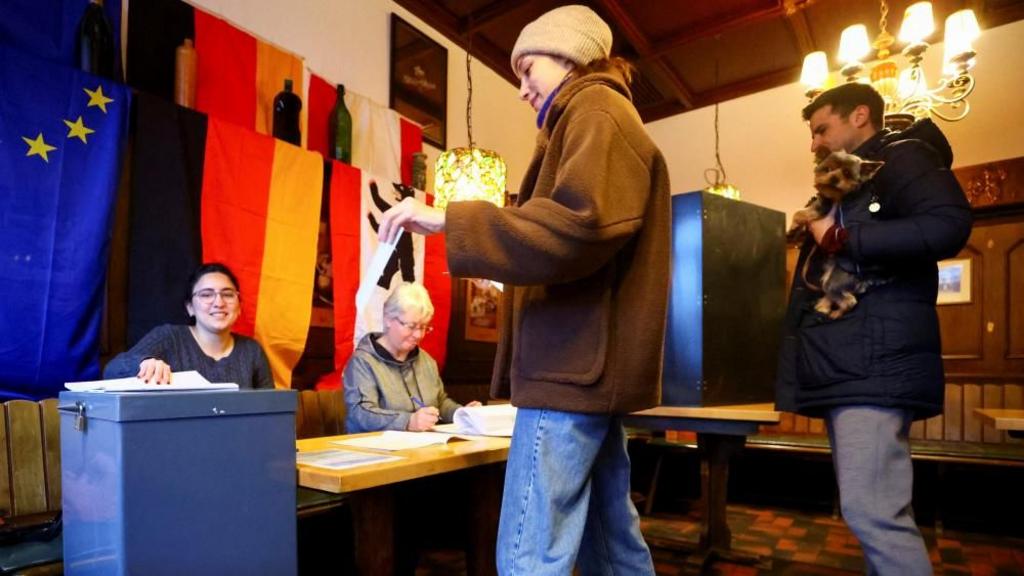
**Berlin, Germany** – Germany holds a crucial snap federal election today, February 23rd, following the collapse of the three-party coalition government late last year. The election is being closely watched both domestically and internationally, with significant implications for Europe and the global stage.
Conservative leader Friedrich Merz is the frontrunner to become the next Chancellor, but the far-right Alternative for Germany (AfD) is poised to become the second-largest party, surpassing the centre-left SPD led by former Chancellor Olaf Scholz. This represents a significant shift in the German political landscape. The AfD, initially an anti-euro party, has gained traction on issues of immigration and Islam, capitalizing on recent deadly attacks in Germany. Their candidate, Alice Weidel, is making history as the party’s first-ever Chancellor candidate.
The election was triggered by a vote of no confidence against Chancellor Scholz in December, following a cabinet reshuffle and budget disputes. The current political climate is further complicated by concerns over Germany’s struggling economy, deteriorating infrastructure, a depleted military, and ongoing debates surrounding immigration.
Approximately 59.2 million Germans are eligible to vote, with a significant portion already casting ballots by mail. However, a considerable number of voters remain undecided, adding to the uncertainty surrounding the election outcome. The results will determine not only Germany’s domestic policies but also its role in international affairs, particularly given its position as Europe’s largest economy. Mr. Merz has vowed not to form a coalition with the AfD, but the party’s strong showing highlights a growing far-right presence in German politics. The formation of a stable coalition government will be crucial in navigating the country’s complex challenges.
 First Piper