
Fri Feb 21 15:33:23 UTC 2025: ## India Aims to Boost Critical Mineral Production Through Auctions and Public-Private Partnerships
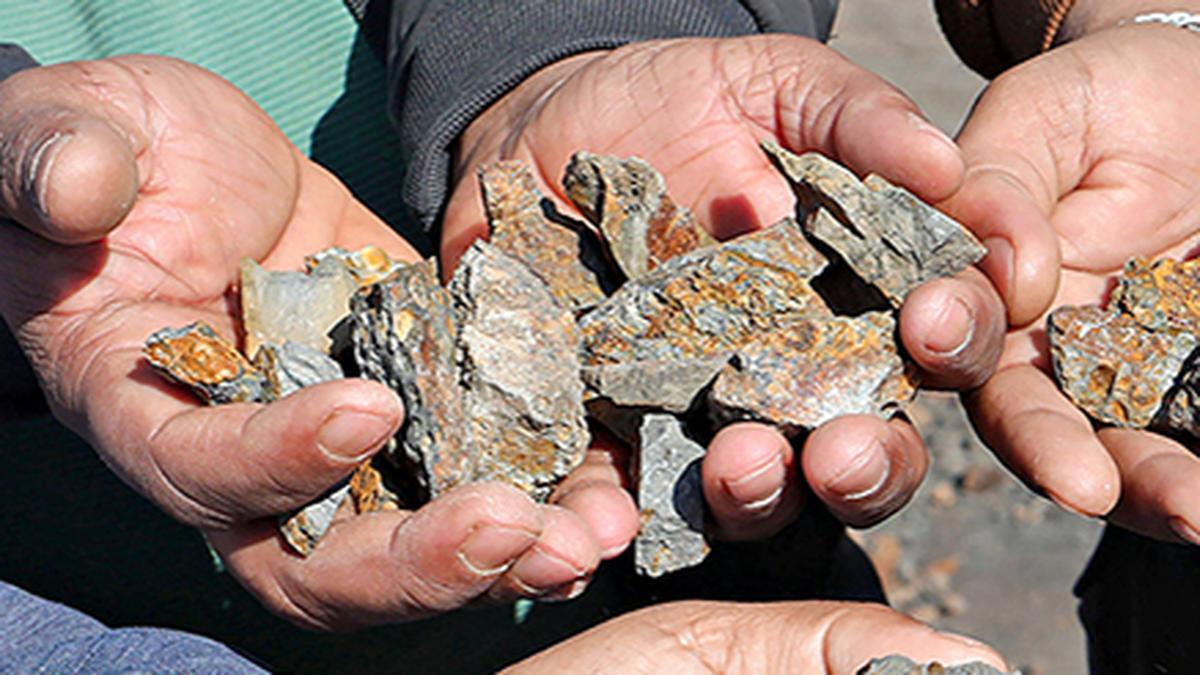
**New Delhi, February 21, 2025** – The Indian government is accelerating its efforts to secure its supply of critical minerals, crucial for industries like electric vehicles and consumer electronics. Following the approval of a ₹16,300-crore National Critical Mineral Mission (NCMM) in January, the government plans to auction more mineral blocks by 2031, according to Union Minister of State for Mines and Minerals Satish Chandra Dubey.
Dubey announced the plan at a FICCI meeting, highlighting the importance of public-private partnerships to achieve this goal. The government has already auctioned 24 critical mineral blocks, and the NCMM itself includes a further ₹18,000 crore investment from public sector units.
A new report by FICCI and Deloitte reveals India possesses significant reserves of several critical minerals, including lithium (12.3 million tonnes), nickel (189-194 million tonnes), cobalt (45 million tonnes), graphite (211-244 million tonnes), and rare-earth elements (230 million tonnes). However, the report also underscores India’s heavy reliance on imports for most of these minerals, except graphite, to meet future demand.
Challenges remain. The report points to a lack of quality reserves of cobalt, niobium, germanium, and rhenium, as well as insufficient exploration data deterring investment. Technological limitations also hinder extraction, particularly with lithium, where India lacks the capacity to extract it from its existing deposits despite possessing 5.9 million tonnes in Jammu and Kashmir. Further complexities include land acquisition difficulties, resettlement challenges, and lengthy development timelines.
The government’s strategy includes focusing not only on developing new mines but also on extracting valuable minerals from existing mine waste and tailings, which contain significant amounts of copper, manganese, rare-earth elements, and titanium. This initiative aims to enhance supply and mitigate risks associated with growing demand.
 First Piper