
Tue Feb 18 16:34:00 UTC 2025: ## Tamil Nadu Rejects Hindi Imposition: Echoes of 1968 Anti-Hindi Agitation
**Chennai, February 18, 2025** – A current political debate in Tamil Nadu over the BJP government’s push for a three-language formula in schools has revived memories of the 1968 anti-Hindi agitation. The controversy centers around the National Education Policy 2020, which advocates for the three-language formula. This has ignited strong opposition in Tamil Nadu, echoing the widespread protests that led to the state’s adoption of a two-language policy (Tamil and English) nearly six decades ago.
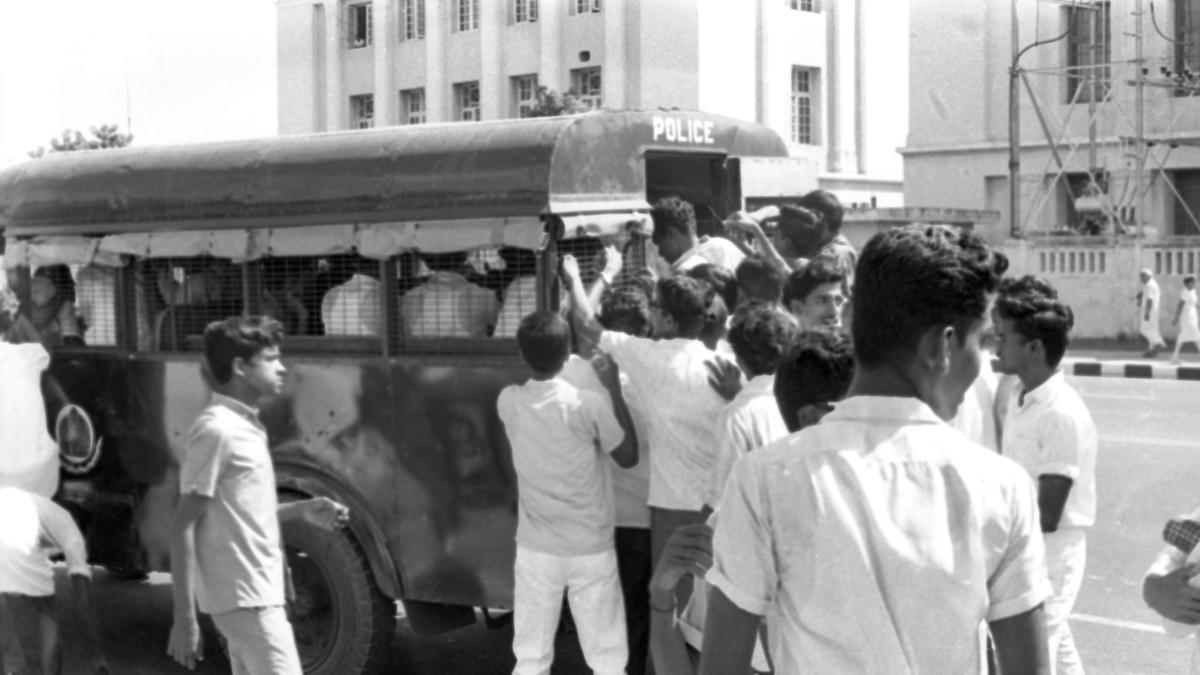
Historical accounts reveal that widespread student protests in 1967 forced the then DMK government, led by C.N. Annadurai, to shut down educational institutions. The state subsequently passed a resolution on January 26, 1968, rejecting the three-language formula proposed by the central government. This resolution argued that imposing a single official language in a diverse nation would lead to regional dominance and advocated for English to remain the official language until Tamil and other national languages were adopted. The resolution explicitly stated that the three-language formula would unjustly burden non-Hindi speaking regions and force Hindi on them.
The then Deputy Prime Minister, Morarji Desai, expressed concern over Tamil Nadu’s two-language policy, suggesting the central government was considering a response. However, Annadurai defended the state’s stance, asserting that the central government’s language policy, not the DMK, was the root cause of the conflict. He emphasized his commitment to Indian sovereignty while advocating for equality among all regions, rejecting accusations of secessionist tendencies.
The 1968 resolution, which eliminated Hindi from the Tamil Nadu school curriculum, underscores the deep-seated linguistic sensitivities within the state and provides a historical context for the current opposition to the three-language formula. The events of 1967-68 serve as a stark reminder of the strong emotions surrounding language policy in Tamil Nadu and the potential for significant political repercussions.
 First Piper