
Mon Feb 10 03:00:00 UTC 2025: ## Indian Railways Budget Fails to Deliver on Promised Transformation
**New Delhi, February 10, 2025** – Despite significant government investment over the past decade, the Indian Railways (IR) continues to underperform, according to a recent analysis. While the latest Union Budget touted infrastructure improvements and increased safety spending, critics argue it lacks concrete plans and fails to address critical challenges.
The IR’s financial performance remains underwhelming, with freight traffic growth stagnating at just over 2% and passenger patronage below pre-COVID levels. Although the budget allocated ₹1,16,514 crore for safety initiatives, concerns remain regarding the slow rollout of the Kavach safety system, with no new kilometers added since its initial deployment.
While the government highlights significant progress in electrification—reaching 95%—questions arise about the efficient utilization of resources, given that thousands of diesel locomotives are now underutilized. The much-anticipated expansion of the high-speed rail network, with a target of 7,000 km by 2047, lacks a clear roadmap.
Similarly, major projects like the Western Dedicated Freight Corridor and the Mumbai-Ahmedabad High-Speed Rail received no substantial updates in the budget. Even the redevelopment of key stations, such as New Delhi station, remains stalled due to bureaucratic delays and a shift to an Engineering, Procurement, and Construction (EPC) model after the failure of Public-Private Partnership (PPP) projects.
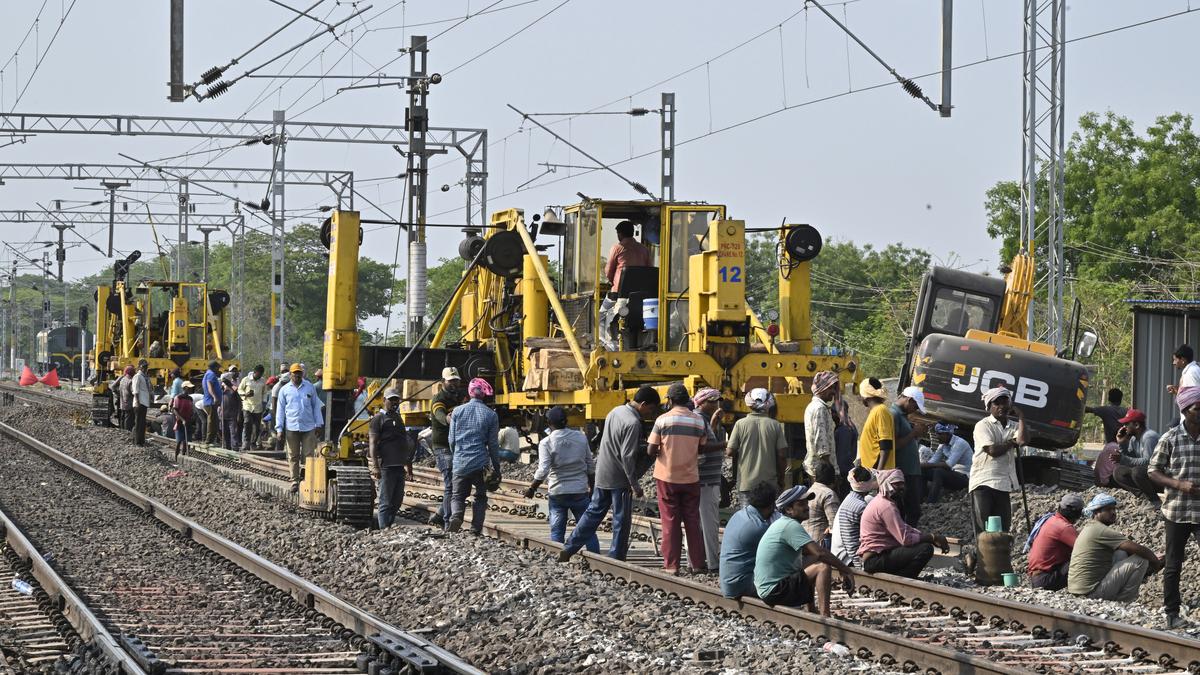
The Railways Minister emphasized the accelerated pace of infrastructure development, citing increased track laying and station modernization. However, the lack of specific timelines for promised projects and the continued reliance on headline-grabbing announcements, rather than concrete strategies, raises doubts about the IR’s ability to achieve a true transformation. Experts warn that the current trajectory suggests the IR is merely “chugging along,” rather than undergoing the necessary systemic changes.
 First Piper