
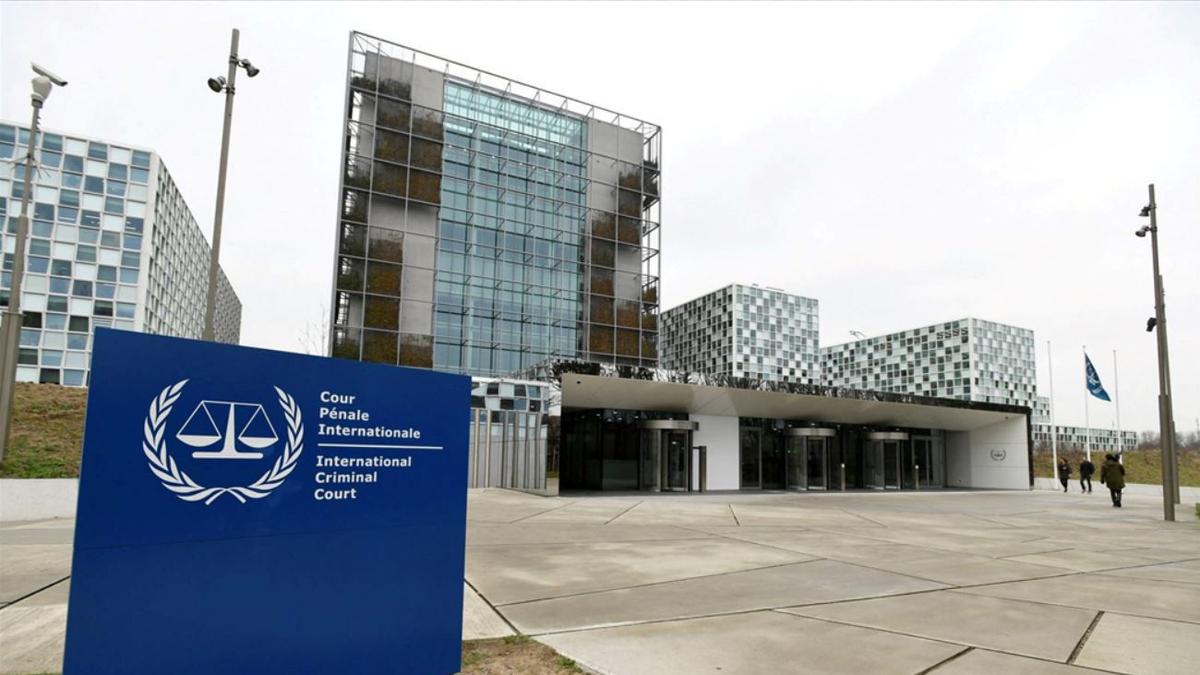
Sat Feb 08 19:37:00 UTC 2025: ## Trump Re-Imposes Sanctions on International Criminal Court
**The Hague/Washington D.C. —** U.S. President Donald Trump has signed an executive order re-imposing sanctions on the International Criminal Court (ICC), escalating a long-standing conflict between Washington and the international tribunal. The sanctions, announced February 6th, 2025, target individuals involved in investigations deemed threatening to U.S. national security and its allies, specifically citing the ICC’s arrest warrants for Israeli Prime Minister Benjamin Netanyahu and Defence Minister Yoav Gallant.
This action marks a renewed confrontation with the ICC, following similar sanctions imposed in 2020 under the Trump administration against then-ICC Prosecutor Fatou Bensouda. While the Biden administration subsequently rescinded those sanctions, the latest move has drawn sharp criticism from key allies like the U.K., France, and Germany, who reaffirmed their unwavering support for the court.
The U.S. has a history of strained relations with the ICC, stemming from concerns about its independence and potential to prosecute American personnel. While the Clinton administration played a role in the ICC’s creation, it never ratified the Rome Statute, fearing scrutiny of U.S. actions. The Bush administration actively opposed the court, enacting legislation to shield U.S. nationals from its jurisdiction. Although relations briefly softened under the Bush and Obama administrations, cooperation remained conditional and selective.
The Biden administration’s inconsistent approach, supporting the ICC’s warrant for Vladimir Putin while condemning the Netanyahu warrant, has further exposed Washington’s perceived double standards regarding the “rules-based international order.”
The ICC faces numerous challenges, including a dwindling caseload, internal investigations into sexual harassment allegations against its chief prosecutor, and a persistent lack of support from major global powers. Its reliance on member states for enforcement and the absence of its own police force further limit its effectiveness. Criticisms also include a perceived bias toward prosecuting individuals in Africa and a failure to hold high-ranking political figures from powerful nations accountable. The court’s future hinges on the resolve of its member states to withstand U.S. pressure and address its internal issues with transparency and accountability.
 First Piper