
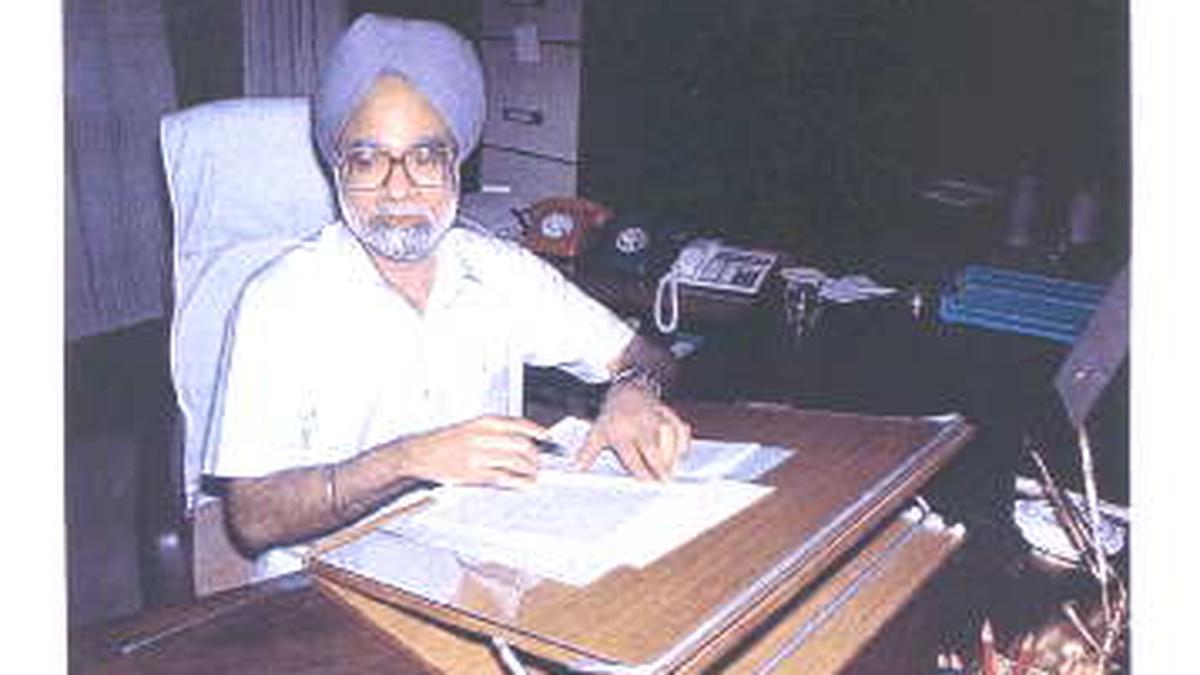
Fri Jan 31 13:35:12 IST 2025: ## Manmohan Singh’s 1991 Budget: A Bold Gamble That Reshaped India’s Economy
**New Delhi, January 31, 2025** – Thirty-four years ago, facing a crippling economic crisis, India embarked on a path-breaking economic liberalization under then-Finance Minister Manmohan Singh. His maiden budget, presented in July 1991, became a landmark moment, effectively ending decades of socialist policies and ushering in an era of globalization and privatization.
The country was teetering on the brink. Following the assassination of Prime Minister Rajiv Gandhi, political instability compounded existing economic woes, including severe fiscal imbalances, rampant inflation, and dwindling foreign exchange reserves (enough to cover only two weeks of imports). International financial institutions demanded drastic reforms.
Newly appointed Prime Minister P.V. Narasimha Rao, sensing the urgency, entrusted the crucial task to the relatively unknown Manmohan Singh, an academic with no prior legislative experience. Singh’s budget boldly embraced liberalization, privatization, and globalization (LPG), a policy later famously abbreviated as such.
Key measures included relaxing licensing requirements, deregulation of domestic industries, and opening the door to foreign direct investment (FDI). The budget permitted up to 51% foreign equity in priority industries and extended this to export-oriented trading companies. A special board was also created to negotiate and approve FDI in selected sectors, aiming to attract high-tech investment and access to global markets.
Despite internal resistance to FDI, Singh championed its potential to bring in capital, technology, and market access, expressing confidence in Indian entrepreneurs. The budget also sought to improve the efficiency of public sector undertakings (PSUs) by offering up to 20% of government equity to mutual funds and employees. Singh aimed to make PSUs engines of growth rather than drains on national savings.
The budget also addressed the need for greater regulation and transparency in the capital markets. Singh proposed establishing the Securities and Exchange Board of India (SEBI), an independent body to regulate stock exchanges, protect investors, and prevent malpractices, fulfilling a promise made by the late Rajiv Gandhi. The mutual fund market was also opened to private sector participation under SEBI’s purview.
While the initial market reaction was mixed, with the BSE index fluctuating, the long-term impact of the reforms was largely positive. The World Bank later praised the budget’s focus on deficit reduction through expenditure cuts rather than ad-hoc tax increases, and its protection of investment and social development spending. The budget aimed to reduce the fiscal deficit to 6.5% of GDP, a significant decrease from the previous year.
However, as noted in Jairam Ramesh’s 2016 book “To the Brink and Back,” internal disagreements within the government posed a challenge to Singh’s implementation of his vision.
Singh’s 1991 budget remains a pivotal moment in India’s economic history, a bold gamble that ultimately paved the way for the country’s emergence as a global economic player.
 First Piper