
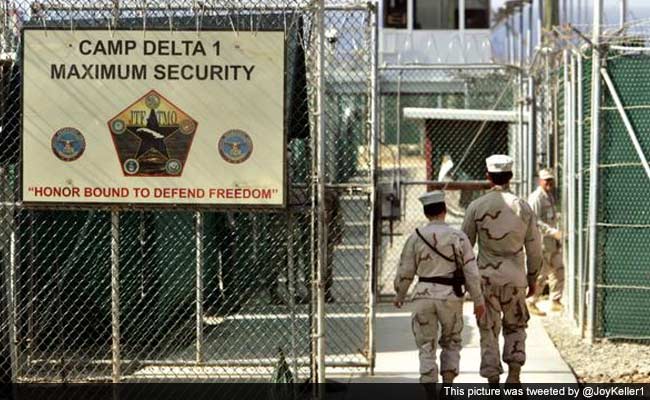
Thu Jan 30 13:25:56 IST 2025: ## Trump to Detain 30,000 Migrants at Guantanamo Bay
**Washington D.C.** – In a controversial move, President Donald Trump announced plans to house 30,000 undocumented immigrants at the Guantanamo Bay military prison. The announcement came as Trump signed the Laken Riley Act, a bill allowing for the pretrial detention of undocumented migrants charged with theft and violent crimes.
Trump stated that he is issuing an executive order directing the Pentagon and Homeland Security to prepare the Guantanamo facility for the influx of migrants, citing the need to detain “the worst criminal illegal aliens threatening the American people.” He described Guantanamo as a “tough place to get out of,” suggesting the measure will deter illegal immigration.
The decision has sparked immediate outrage from human rights organizations and international critics, who highlight the prison’s history of alleged human rights abuses, including allegations of torture and force-feeding of hunger strikers. Since its opening in 2002, Guantanamo has held numerous terrorism suspects, though only 15 detainees remain. While the US has held migrants at Guantanamo in a separate area in the past, Trump’s plan represents a significant escalation.
The Laken Riley Act, named after a US student killed by a Venezuelan immigrant, forms the legal basis for this action. While the act focuses on pretrial detention for certain crimes, Trump’s plan goes far beyond the scope of the legislation itself.
Guantanamo Bay’s history is marked by controversy. Opened in the aftermath of 9/11, the facility was intended to hold “enemy combatants.” Despite efforts by previous administrations to close it, Congress has blocked such moves. The prison has housed individuals accused of involvement in major terrorist attacks, such as the 9/11 attacks and the USS Cole bombing, but a significant number of detainees were never charged or convicted of any crime.
The long-term implications of Trump’s decision, both domestically and internationally, remain to be seen. The plan faces significant legal and ethical challenges and is likely to intensify global criticism of US human rights practices.
 First Piper