
Tue Jan 21 11:00:28 UTC 2025: ## Hinduism’s Enduring Resilience: A Story Told Through the Kumbh Mela
**Allahabad, India** – Hinduism, the world’s third-largest religion, defies easy categorization. Unlike many faiths, it lacks a central authority, a single holy book, or a universally accepted definition of orthodoxy. This inherent diversity, often seen as chaotic by outsiders, is arguably the key to its remarkable survival. For millennia, Hinduism has thrived in India, weathering the rise and fall of empires and the spread of other major religions.
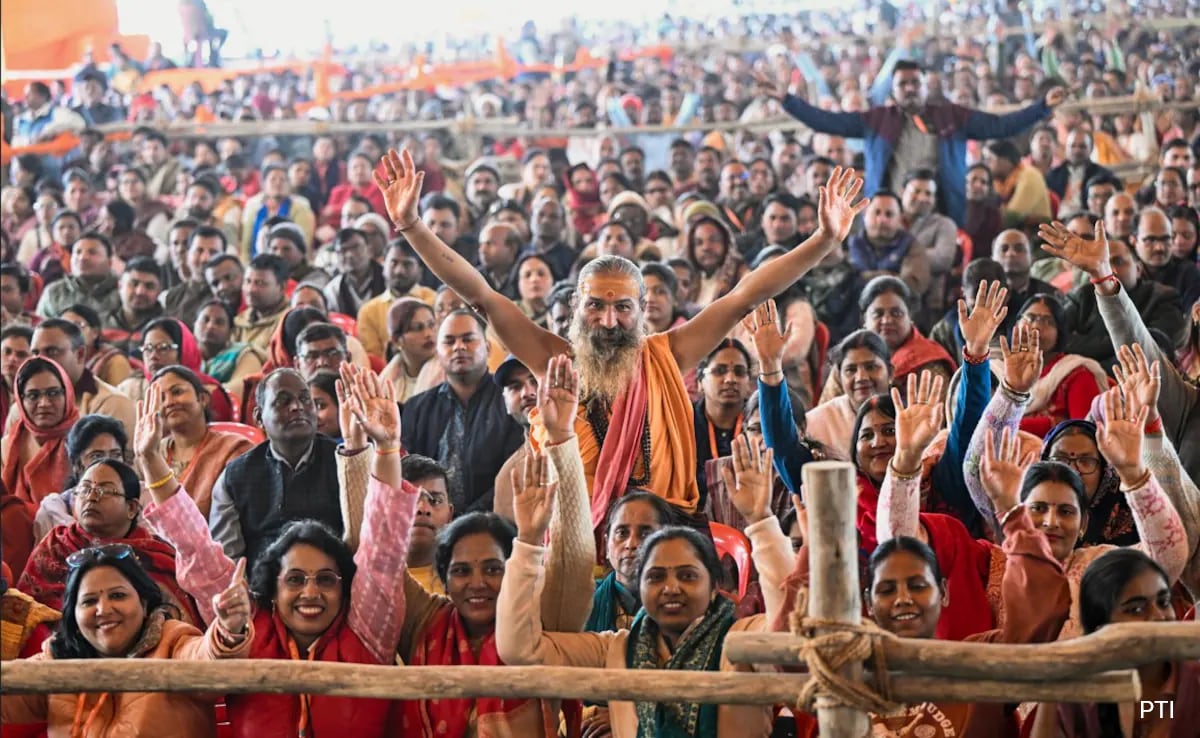
The Kumbh Mela, a massive religious gathering held every 12 years in four sacred cities, vividly illustrates this resilience. Millions of pilgrims, irrespective of caste or sect, converge to bathe in sacred rivers believed to transform into the nectar of immortality. This spectacle, referenced in ancient texts and witnessed by historical travelers, transcends mere religious observance; it’s a powerful display of cultural cohesion and spiritual unity.
The Kumbh Mela’s origins are steeped in mythology, centered around the legend of the “amrit” (nectar of immortality) spilled at the four locations where the Mela is now celebrated. However, its significance in the medieval era, a period of great challenge for Hinduism, cannot be overlooked. The event served as a crucial tool for unifying the faith and bolstering its resilience during periods of political instability and foreign invasion. Strategically located temples, pilgrimage routes, and festivals fostered a network connecting diverse regions of India.
The Kumbh Mela’s role in resisting British rule is also noteworthy. The vast gathering, initially viewed with suspicion by the colonial authorities, became a symbol of Hindu resistance. Despite British attempts to suppress it, the Kumbh Mela continued to thrive, fueled by unwavering faith and a shared cultural heritage.
Even today, the Kumbh Mela, with its mix of spiritual devotion, commercial activity, and political influence, stands as a testament to India’s enduring cultural identity. It powerfully rejects the homogenizing forces of globalization, showcasing the strength of a faith that has navigated centuries of upheaval and emerged stronger, richer, and more vibrant. The Mela is more than a religious gathering; it’s a living testament to Hinduism’s unique ability to adapt and endure.
 First Piper