
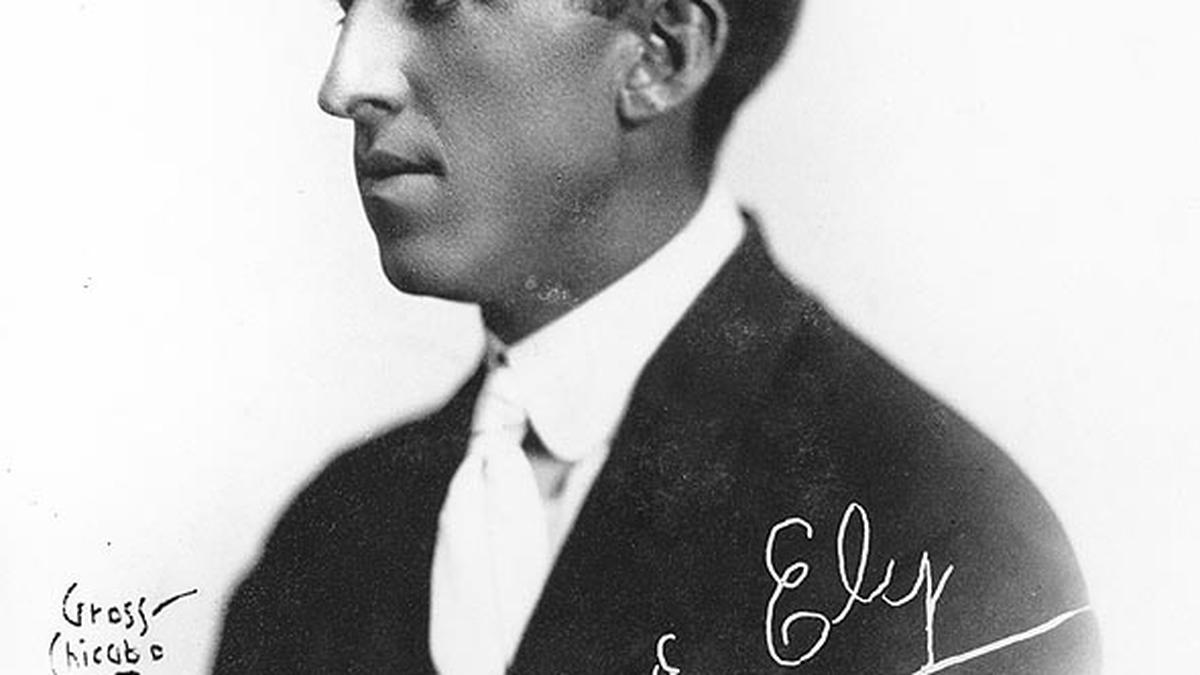
Sat Jan 18 18:22:00 UTC 2025: ## Aviation Pioneer Eugene Ely’s Historic Firsts: Naval Aviation Takes Flight
**San Francisco, CA – January 18, 1911** – A century ago today, aviation history was made. American aviator Eugene Burton Ely successfully landed an airplane on a U.S. Navy ship, marking the birth of naval aviation. This groundbreaking feat, accomplished aboard the USS Pennsylvania in San Francisco Bay, followed Ely’s equally remarkable first successful takeoff from a ship, the USS Birmingham, on November 14, 1910.
Ely, a former automobile salesman and race car driver, learned to fly in 1910 after purchasing and repairing a wrecked Curtiss biplane. His talent quickly caught the eye of aviation pioneer Glenn Curtiss, who recruited him for his exhibition team. Ely’s daring spirit and skill led him to accept Captain Washington Irving Chambers’ challenge to take off from a ship – a proposition without any financial backing, but with the promise of a vessel for the attempt.
Ely’s November 14th takeoff from the USS Birmingham, though successful, was a precarious undertaking due to the short, makeshift runway. He managed a successful takeoff, a daring flight, and a water landing just short of shore.
However, the real challenge lay in the landing. In January 1911, Ely, with the help of the ingenious tailhook landing system invented by Hugh Armstrong Robinson, successfully executed the first-ever landing on a ship. This involved a modified aircraft with hooks, ropes and sandbags rigged on a longer platform aboard the USS Pennsylvania.
Ely’s landing was met with immense excitement, marking a pivotal moment in aviation. The success of his innovative landing technique, using Robinson’s tailhook system, would shape the future of naval aviation, a technology still in use today in an advanced form.
Tragically, Ely’s life was cut short in October 1919 during an air show. Despite his short but impactful career, lasting less than two years, he remains a celebrated figure in aviation history. The Navy posthumously awarded him the Distinguished Flying Cross in 1933 for his groundbreaking achievements. His legacy is not just in the skies, but in the history books as the father of naval aviation.
 First Piper