
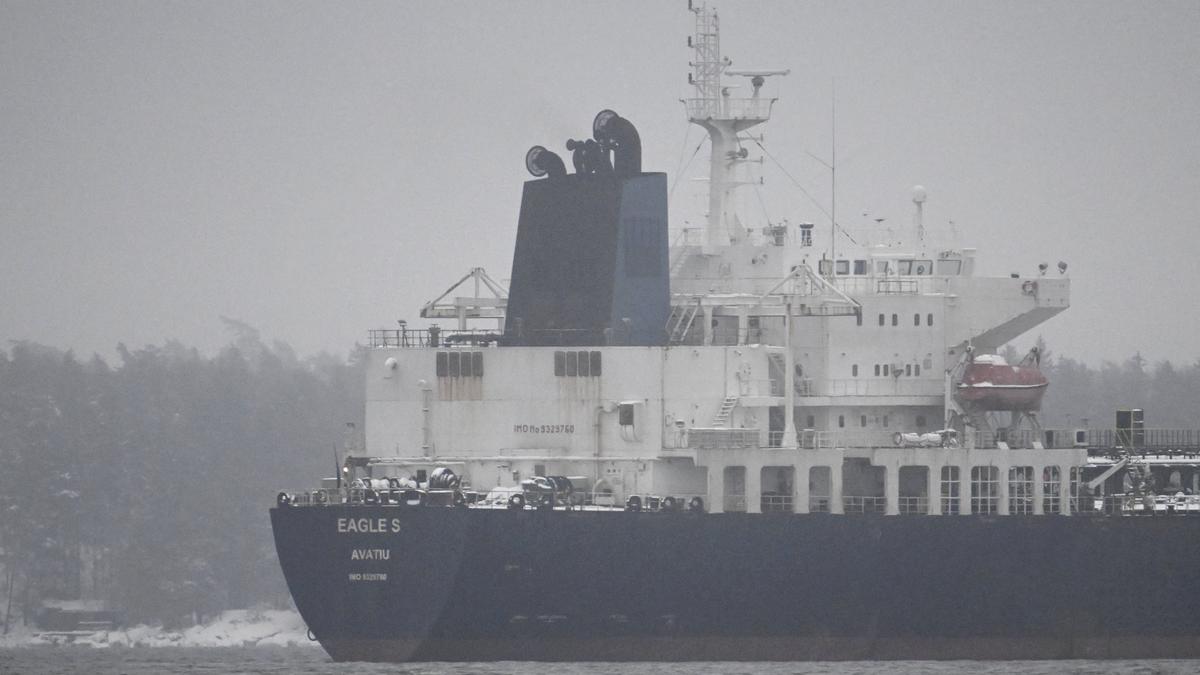
Sun Jan 12 09:17:29 UTC 2025: ## US Sanctions on Russian Oil Send Shockwaves Through Global Markets
**New Delhi, January 12, 2025** – New US sanctions targeting Russian oil producers and tankers are set to dramatically reshape the global oil market, forcing major importers like China and India to seek alternative sources and driving up prices, according to traders and analysts.
The sanctions, imposed on Friday, January 10th, target Gazprom Neft and Surgutneftegas, along with 183 vessels that transported over 530 million barrels of Russian crude oil in 2024 – roughly 42% of Russia’s seaborne exports. A significant portion of this oil (around 300 million barrels) went to China, with a substantial amount also delivered to India.
This move is expected to severely curtail Russia’s oil export capabilities. Sources in China predict a reduction in refining output due to the sanctions. Analysts suggest that the sanctions will significantly reduce the number of available tankers for transporting Russian crude, leading to a surge in freight costs. One Singapore-based trader stated that the sanctioned tankers shipped nearly 900,000 barrels per day (bpd) of Russian crude to China in the past year, and that this volume will “drop off a cliff.”
India, which increased its Russian crude imports by 4.5% year-on-year to 1.764 million bpd in the first eleven months of 2024, and China, which saw a 2% increase to 2.159 million bpd, will be forced to look towards the Middle East, Africa, and the Americas for alternative supplies. This shift is already causing prices for oil from these regions to rise. Indian refining officials have confirmed this, stating they will need to increase purchases of Middle Eastern, and potentially US, oil.
The sanctions are also prompting speculation that Russia will lower its crude prices below $60 a barrel to compensate for the difficulties in accessing Western insurance and tankers. Analysts predict increased competition for oil from regions like the Middle East and the Atlantic Basin, leading to a tighter Brent/Dubai spread.
The impact extends beyond Russia, with the US also designating more vessels involved in Iranian crude transport last month. This prompted the Shandong Port Group in China to ban sanctioned tankers, further tightening the supply of Iranian oil and pushing China to rely more heavily on Middle Eastern and Canadian crude. The overall effect is expected to be a significant increase in global oil prices and a realignment of global oil trade flows.
 First Piper