
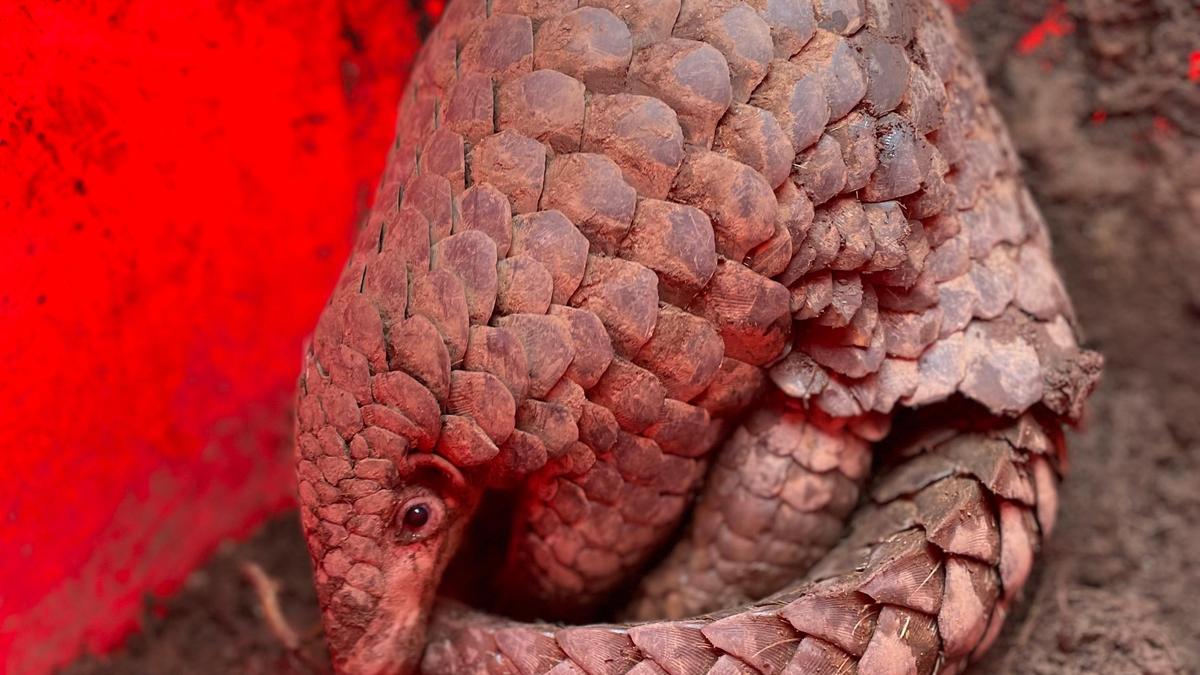
Fri Jan 10 23:05:00 UTC 2025: ## New Pangolin Species Discovered in India
**Kolkata, India – January 11, 2025** – Scientists from the Zoological Survey of India (ZSI) have announced the discovery of a new pangolin species, the Indo-Burmese pangolin (*Manis indoburmanica*). Genetic analysis reveals this species diverged from the Chinese pangolin approximately 3.4 million years ago, a separation likely driven by significant geoclimatic changes in the Indo-Burma biodiversity hotspot.
The findings, published in *Mammalian Biology*, were the result of a study led by Dr. Mukesh Thakur, using cutting-edge genomic tools to analyze mitochondrial genomes. Key to the discovery was the work of Lenrik Konchok Wangmo, a PhD scholar at the University of Calcutta, who identified crucial specimens from Arunachal Pradesh.
The genetic distance between the Indo-Burmese and Chinese pangolins (a significant 0.038 and a barcode gap of 3.8%) confirmed its status as a distinct species. The Indo-Burmese pangolin is believed to have evolved in isolation during the Pliocene and Pleistocene epochs, and is currently found in parts of Arunachal Pradesh and Assam, with a potential range extending to Nepal, Bhutan, and Myanmar.
The discovery underscores the urgent need for conservation efforts, as pangolins are among the world’s most heavily trafficked mammals. Dr. Thakur emphasized the vulnerability of this newly identified species and called for collaborative conservation measures across its range. ZSI Director Dr. Dhriti Banerjee lauded the team’s work, highlighting the importance of scientific research in biodiversity conservation. The recognition of this new species adds a crucial dimension to pangolin conservation efforts, demanding increased protection of their habitats from poaching and degradation.
 First Piper