
Wed Jan 08 00:00:00 UTC 2025: ## Tiny Worm, Giant Discoveries: C. elegans Revolutionizes Biology, Secures Multiple Nobel Prizes
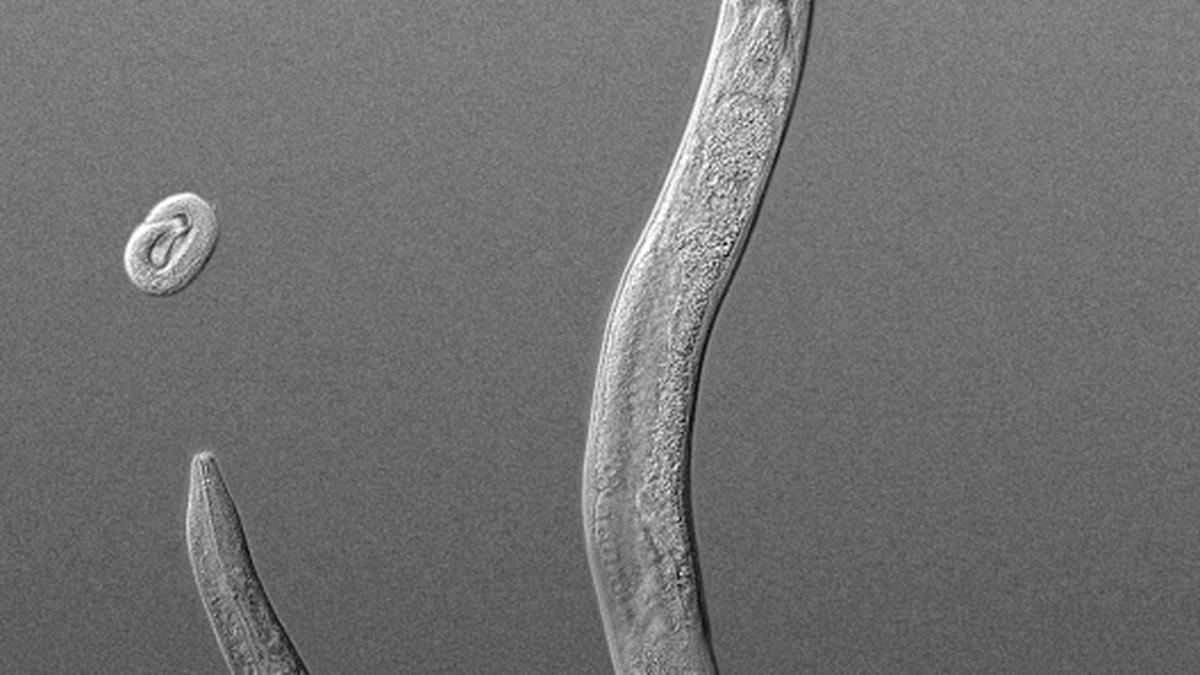
**Mumbai, January 8, 2025** – The humble *Caenorhabditis elegans*, a one-millimeter-long transparent worm, has played a pivotal role in groundbreaking biological discoveries, culminating in the 2024 Nobel Prize in Physiology or Medicine awarded to Victor Ambros and Gary Ruvkun for their work on microRNAs. This isn’t the first Nobel-linked triumph for the unassuming nematode; four Nobel Prizes in total are now associated with research using *C. elegans*.
The worm’s simplicity, short lifespan, and transparent body have made it an ideal model organism for studying fundamental biological processes. Its use began with Sydney Brenner’s vision in the 1960s, who recognized its potential for genetic analysis in development and neurobiology. Subsequent research, involving collaborations and open data sharing across international scientific communities, has yielded remarkable insights.
Key discoveries enabled by *C. elegans* research include:
* **Programmed cell death:** John Sulston’s meticulous mapping of the worm’s cell lineage revealed the process of programmed cell death, a fundamental process with implications for human development and disease. H. Robert Horvitz built upon this work, identifying key genes involved in this process.
* **Ageing:** Research on *C. elegans* has significantly advanced our understanding of the molecular mechanisms of ageing, highlighting the role of insulin signaling pathways.
* **RNA interference (RNAi):** Andrew Fire and Craig Mello’s discovery of RNAi, using *C. elegans*, revolutionized gene research, providing a powerful tool for understanding gene function and with therapeutic potential. This work earned them the 2006 Nobel Prize in Physiology or Medicine.
* **Green fluorescent protein (GFP):** The use of GFP in *C. elegans*, pioneered by Martin Chalfie, transformed biological imaging, allowing scientists to visualize processes in living cells. This led to the 2008 Nobel Prize in Chemistry.
* **MicroRNAs (miRNAs):** Ambros and Ruvkun’s discovery of miRNAs, their role in gene regulation, and their connection to the *lin-4* and *lin-14* genes in *C. elegans* secured the 2024 Nobel Prize in Physiology or Medicine. This work, partly built upon research by P. Babu from the Tata Institute of Fundamental Research, Mumbai, demonstrates a significant contribution from Indian science.
* **Connectomics:** John White’s painstaking reconstruction of the *C. elegans* connectome, a map of its neural connections, was a pioneering achievement in neuroscience.
The *C. elegans* story highlights the power of curiosity-driven research and the importance of international scientific collaboration. Its simplicity belies the profound impact it has had, and continues to have, on our understanding of fundamental biological processes and their relevance to human health. Researchers continue to utilize *C. elegans* to study areas such as nervous system function, ageing, and the immune system, promising further breakthroughs in the future.
 First Piper