
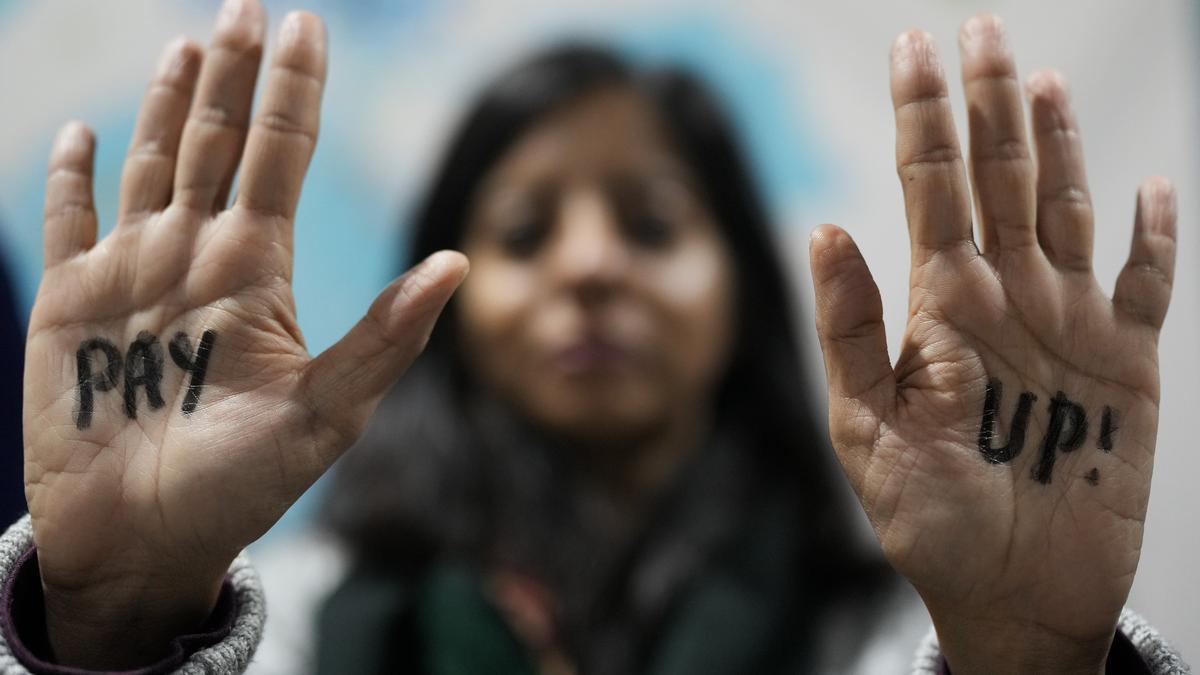
Mon Jan 06 19:11:00 UTC 2025: ## COP29 Upends Climate Treaty, Shifting Focus to Global South Leadership
**Baku, Azerbaijan –** The 2024 UN Climate Summit (COP29) in Baku has dramatically altered the global climate landscape, effectively dismantling the traditional donor-recipient framework established in the 1992 climate treaty. This landmark shift places the onus of sustainable development squarely on developing nations, challenging the established power dynamics between the G7 and the Global South.
Former UN diplomat Mukul Sanwal argues that the original treaty, while aiming for collective action, inherently favored the G7 by focusing on future emissions rather than acknowledging the historical contribution of developed nations to the climate crisis. The G7, Sanwal contends, has leveraged this imbalance in research and political influence to maintain its advantage, shirking responsibility for its disproportionate share of historical emissions. Promises of financial aid by 2035 are, according to India, mere “optical illusions”.
The G7’s historical role as former colonial powers, coupled with its control over the setting of agendas and rules, has perpetuated systemic inequalities within the climate crisis. The Global South, representing 80% of the global population and half of global GDP, is increasingly rejecting the G7’s leadership, demanding climate justice. This is evidenced by the 72 countries explicitly incorporating the concept of a “just transition” into their Nationally Determined Contributions.
Sanwal highlights that current climate solutions, such as carbon pricing and trade restrictions, exacerbate inequalities. The Global South’s distinct urban development patterns, diverging from the resource-intensive models of the G7, represent a critical shift. While the G7 consumed three-quarters of global resources in 1950, with the US alone consuming 40%, their future emissions are projected to be significantly lower than those of rapidly developing nations, especially Asia.
To address this paradigm shift, Sanwal proposes three key initiatives: the creation of an alternative sustainability forum led by BRICS and partner nations; a refocusing of UN climate negotiations on G7 emissions reduction and targeted aid to vulnerable nations; and the reevaluation of international fora as mechanisms for stocktaking and course correction, potentially including the phase-out of ineffective organizations such as the World Trade Organization’s dispute settlement system. This new multilateralism, he argues, would secure the BRICS’ rightful place in the UN Security Council.
 First Piper