
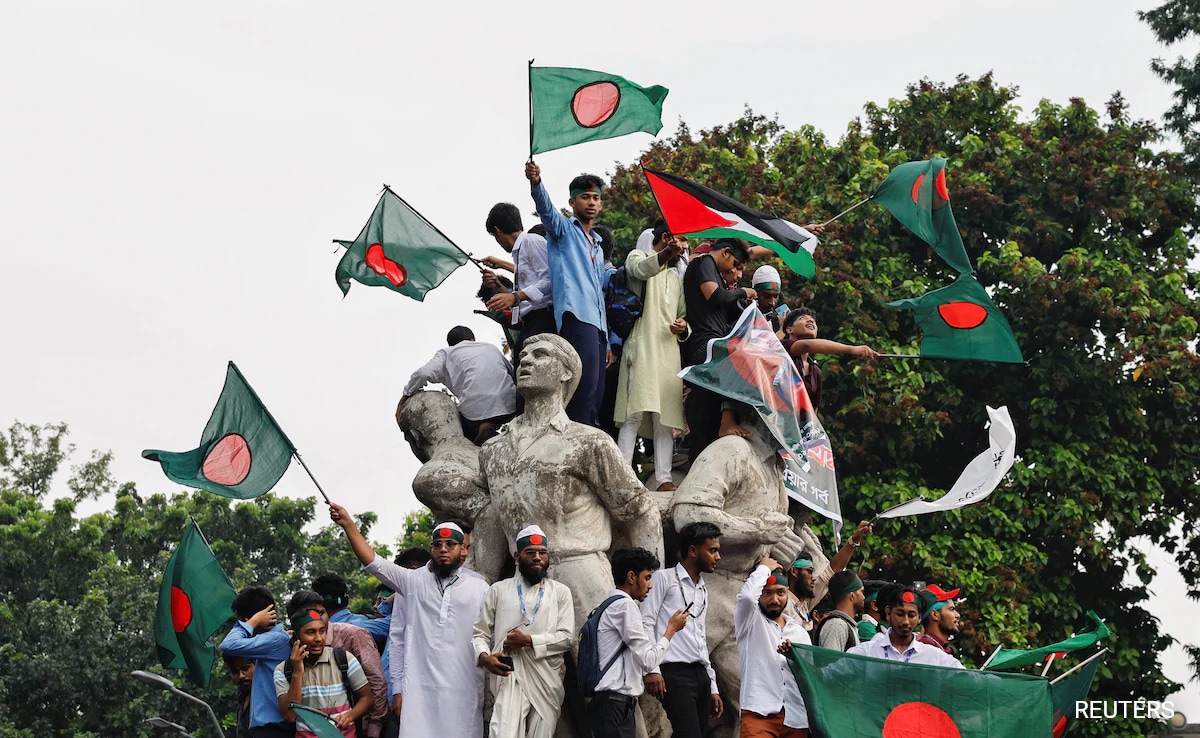
Wed Dec 25 11:57:33 UTC 2024: ## The Economist’s Bangladesh “Country of the Year” Choice Sparks Controversy
**New Delhi, India** – The Economist’s designation of Bangladesh as its “Country of the Year” following a regime change has drawn sharp criticism, with former Indian Foreign Secretary Kanwal Sibal accusing the publication of hypocrisy and ignoring crucial geopolitical realities. Sibal argues the choice reflects Western political maneuvering rather than a genuine assessment of democratic progress in Bangladesh.
The article highlights the apparent contradiction of Western powers, including the UK and US, celebrating the ouster of Sheikh Hasina, previously criticized for suppressing democracy, while maintaining close ties with numerous non-democratic nations. Sibal points to the West’s relationships with China, Vietnam, and Singapore as examples of a double standard.
Sibal contends that the focus on Bangladesh’s internal politics ignores the potential negative impact on India’s strategic interests. Major connectivity and development projects, implemented successfully under Hasina, are now at risk. Furthermore, the suppression of insurgent groups operating from Bangladesh, a key achievement under Hasina’s rule, could be reversed. The author expresses concern over the potential increase of Chinese influence in the region as a consequence of the regime change.
The article also criticizes the West’s seemingly indifferent attitude towards the rise of Islamist forces in the region, citing past support for Pakistan, overlooking Pakistan’s use of terrorism, and failing to adequately address concerns about Khalistani extremism operating from UK soil. The author suggests that the West’s actions in Afghanistan and Syria further demonstrate a disregard for regional stability and India’s security concerns.
Sibal accuses *The Economist* of presenting a convenient narrative that overlooks the history of authoritarian rule in Bangladesh, including under the BNP, and the potential for increased Islamisation under the new government. The article also dismisses *The Economist*’s claims of restored order and economic stability in Bangladesh, citing concerns raised by India about the law and order situation and persecution of minorities.
In conclusion, Sibal argues that *The Economist*’s choice reflects a biased and politically motivated assessment that prioritizes Western geopolitical interests over the genuine democratic aspirations and regional stability of Bangladesh. The author suggests the decision demonstrates the enduring legacy of British imperialism and a disregard for India’s vital concerns in its neighborhood.
 First Piper