
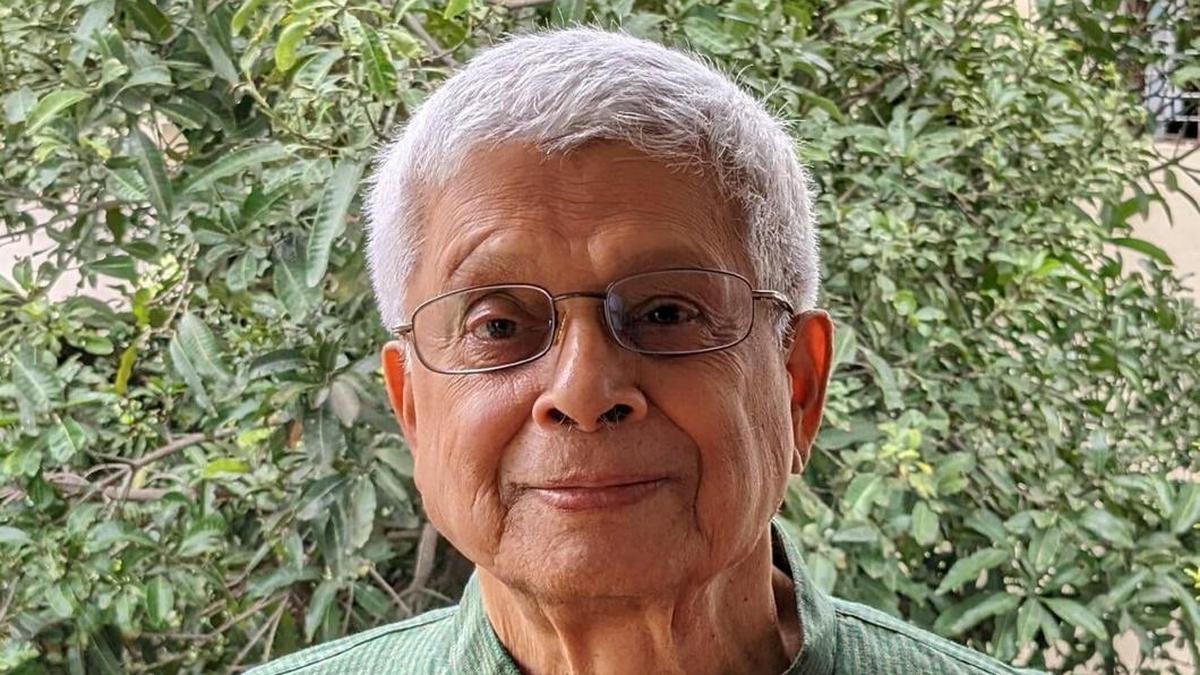
Sun Dec 15 17:58:07 UTC 2024: ## 85-Year-Old Scholar Releases Trilingual Edition of 12th Century Kannada Vachanas
**Bengaluru, December 16, 2024** – Mangesh Venkatesh Nadkarni, a renowned 85-year-old economist and former Vice-Chancellor of Gulbarga University, has released a groundbreaking trilingual edition of selected Vachanas, 12th-century Kannada poems. His book, “Vacanamrtam – Nectar of Sayings, Selected Vacanas of Devotees of Siva,” published by Manipal Universal Press, presents 320 Vachanas translated into both Sanskrit and English, alongside the original Kannada text in Roman script with diacritical marks.
Prof. Nadkarni’s work stands out for its comprehensive approach, including lesser-known Vachanakaras alongside renowned figures like Basaveshwara, Allama Prabhu, and Akka Mahadevi. He selected the vachanas from a corpus of 21,788 collected by the late M.M. Kalburgi. The translations, described as “bhavanuvada” – a translation of the intent and essence – aim for accuracy while preserving the poetic and philosophical richness of the originals.
The Vachanas, characterized as free verse poems with rich ethical and philosophical content, address social injustices that remain relevant today. Prof. Nadkarni highlights the enduring significance of these works, emphasizing the Vachanakaras’ forward-thinking critique of the caste system and ritualism. He notes Basavanna’s success in attracting followers from diverse backgrounds, including the elite, despite his rejection of his Brahmin origins and his embrace of Veerashaivism.
The book sparks debate regarding the classification of Lingayatism. While the foreword by retired IAS officer Chiranjiv Singh frames Lingayatism as a part of mainstream Hinduism, the author acknowledges ongoing discussion on whether it constitutes a separate religion.
Despite the social progress championed by the Vachanas, Prof. Nadkarni also acknowledges the continued exploitation of Dalit communities, prompting reflection on the incomplete integration of Dalits into Veerashaivism. The book, totaling 354 pages, offers a valuable contribution to Kannada literature and a renewed appreciation for the enduring wisdom of the 12th-century Vachanakaras.
 First Piper