
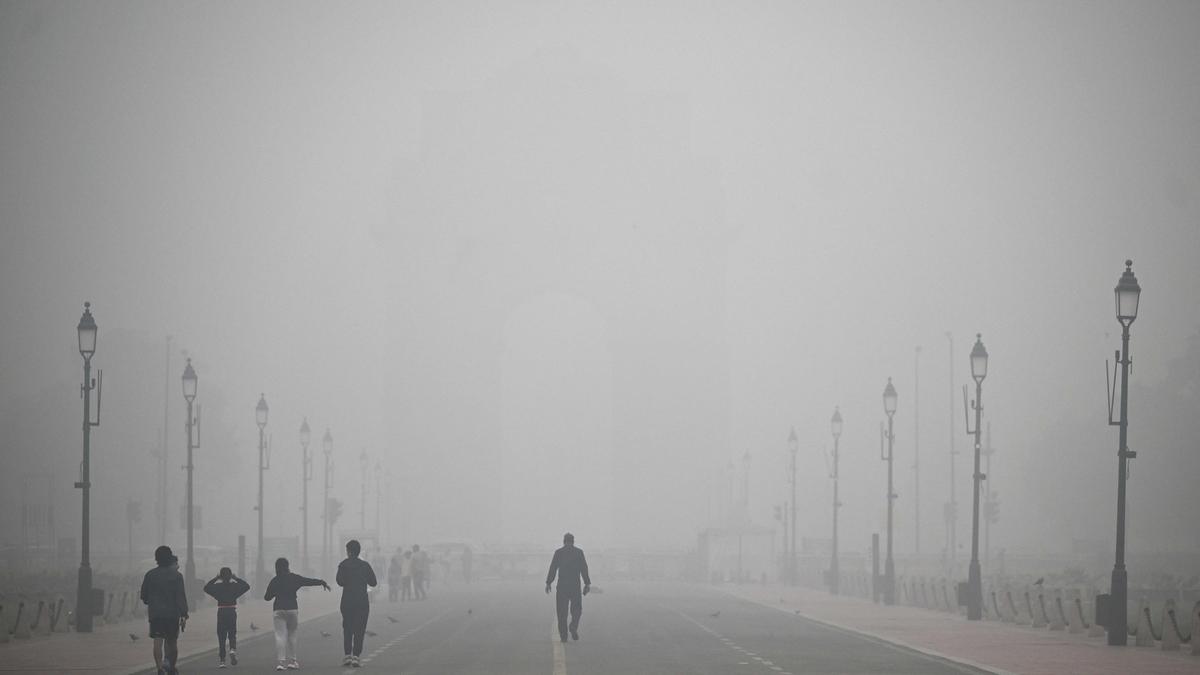
Thu Dec 12 17:16:01 UTC 2024: ## Delhi’s Air Pollution Crisis: Lessons from Beijing’s Success
**New Delhi, December 13, 2024** – A new analysis reveals a stark comparison between Delhi’s current air pollution crisis and Beijing’s successful fight against smog a decade ago. While Delhi’s average air quality index (AQI) in 2024 stands at 155, mirroring Beijing’s 2015 level, Beijing drastically reduced its pollution by one-third between 2013 and 2017. This success, researchers Rohit Azad and Shouvik Chakraborty argue, offers a roadmap for Delhi.
The study, published in *The Hindu*, highlights striking similarities in pollution sources between Beijing in 2013 and Delhi today. Both cities face significant contributions from energy production, transportation, and construction. Beijing’s 20-year anti-pollution program, characterized by phased, meticulously planned interventions and substantial government investment, serves as a compelling case study.
Key strategies employed by Beijing include:
* **Energy sector reform:** Renovating power plants, phasing out coal-fired boilers, and reducing residential coal consumption.
* **Transportation improvements:** Implementing stricter emission standards, subsidizing the scrapping of older vehicles, and expanding public transportation infrastructure.
* **Industrial and construction controls:** Strengthening environmental regulations, enhancing pollution treatment, and employing stringent monitoring and enforcement.
* **Regional cooperation:** Collaborating with neighboring provinces to address transboundary pollution.
This multi-pronged approach, backed by substantial government funding, resulted in significant reductions in major pollutants like sulfur dioxide, nitrogen oxides, volatile organic compounds, and PM2.5.
The researchers argue that Delhi needs to adopt a similar comprehensive strategy, focusing on:
* **Improved public transport:** Expanding and modernizing the bus and metro systems, coupled with dedicated cycling and walking lanes.
* **Energy transition:** Shifting away from coal-fired power plants towards renewable energy sources like solar power.
* **Regional collaboration:** Working with neighboring states to address regional pollution sources.
* **Increased political will:** Holding the government accountable for tackling air pollution and prioritizing the public’s right to clean air.
The authors criticize the lack of political will in Delhi, where the central and state governments continue to blame each other while air quality remains dangerously poor. They stress that relying on individual solutions like air purifiers is insufficient and inequitable. Delhi, they conclude, urgently needs to adopt a comprehensive, Beijing-inspired approach to overcome its air pollution crisis.
 First Piper