
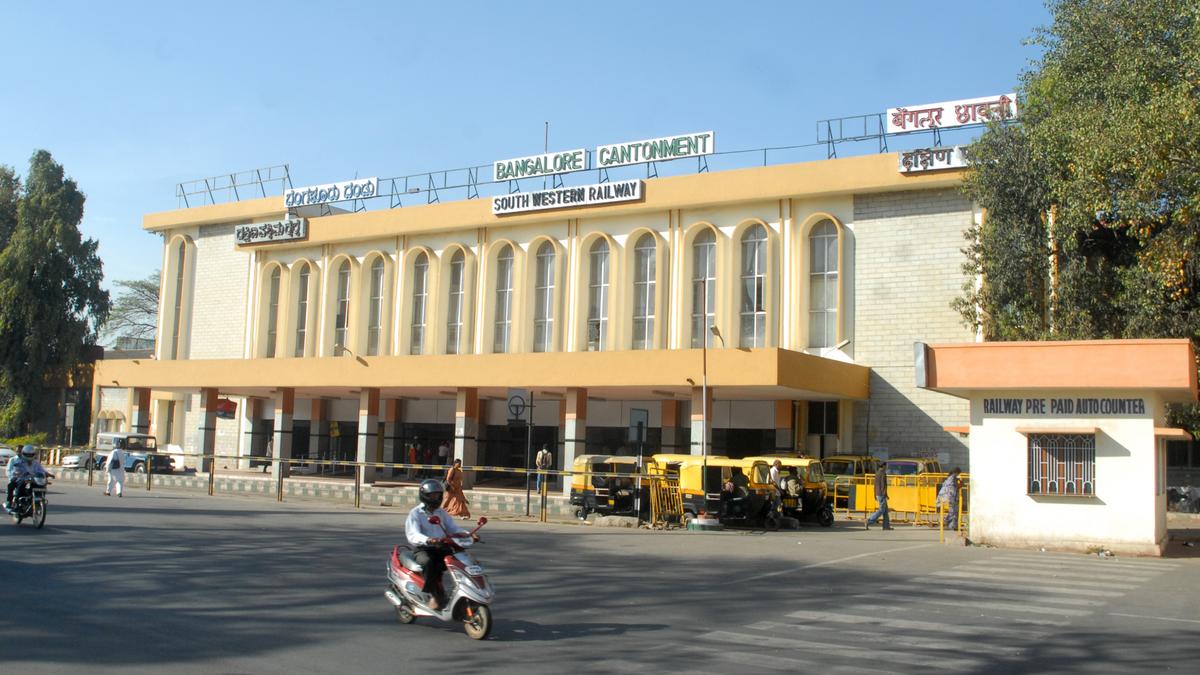
Fri Dec 06 03:30:00 UTC 2024: ## Bengaluru’s Blurred Boundaries: A Historical Look at Cantonment and Pete
**Bengaluru, December 6, 2024** – The rapid expansion of Bengaluru has blurred the historical lines separating its distinct areas, particularly the Cantonment and Pete regions, according to historian Janaki Nair. In a recent talk, Nair highlighted the complex and often contested boundaries that defined these areas throughout the 19th and 20th centuries.
Initially, a stark contrast existed between the Cantonment, a primarily British military and civil station, and the older Pete, the pre-existing 16th-century city. These areas differed significantly in terms of race, language, economic activities, infrastructure, and even perceptions of time and space.
Nair notes that until 1807, British presence in Bengaluru was minimal. Following increased construction and the influx of European settlers, the British attempted to define the Cantonment’s boundaries, initially proposing vague, “imaginary” lines. The Maharaja of Mysore, however, resisted this, fearing loss of revenue and control, ultimately refusing to concede more land than necessary for military facilities.
By the 1830s and 40s, with British power strengthened and Bengaluru becoming the administrative capital of Mysore, the situation changed. The ambiguous boundaries became a point of contention, particularly concerning jurisdiction over villages bordering the Cantonment. The British military desired control, primarily to regulate access to cheaper alcohol and prostitution in the Pete.
Mark Cubbon, the Commissioner of Mysore, engaged in a significant power struggle with the military over civilian rights within these contested areas. Cubbon successfully argued against granting the military absolute power over civilians, preventing a potential conflict with the wealthy native community and mitigating the risk of unrest similar to the 1857 Rebellion.
By 1881, the Cantonment’s boundaries were physically marked but continued to expand over subsequent decades. The British focus on maintaining order extended to controlling the behaviour of soldiers, particularly regarding venereal disease. The establishment of “lock hospitals” for the compulsory examination and treatment of women suspected of having venereal diseases highlights the colonial authorities’ anxieties surrounding sexual health and racial boundaries. The high rates of venereal disease among European troops in Bengaluru underscore the complexities of the social dynamics of the time.
Nair’s research reveals the long and complicated history of defining and redefining space in Bengaluru, a history marked by power struggles, evolving social norms, and the enduring impact of colonialism on the city’s urban fabric.
 First Piper