
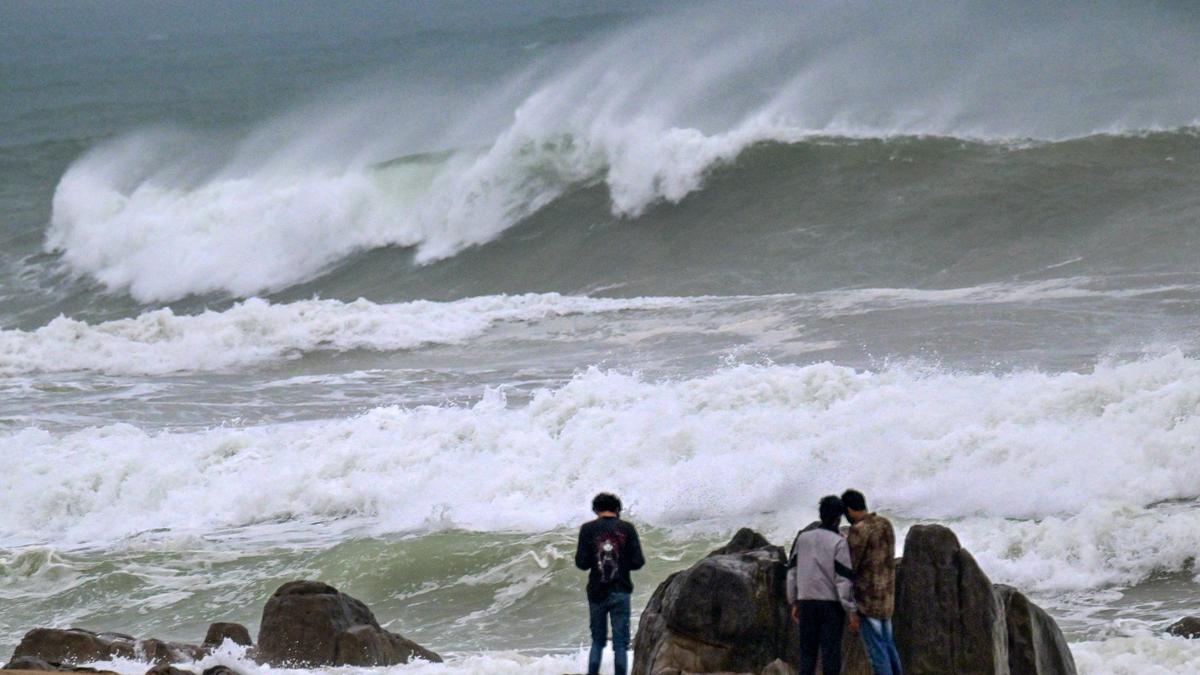
Sat Nov 30 11:50:52 UTC 2024: **Visakhapatnam Hit by High Waves as Cyclone Fengal Makes Landfall**
VISAKHAPATNAM, India (November 30, 2024) – High tidal waves lashed the shores of Visakhapatnam’s R.K. Beach on November 30th as Cyclone Fengal made landfall. The tropical cyclone, characterized by its powerful winds and heavy rainfall, caused significant coastal flooding.
According to meteorological experts, cyclones form when warm sea water evaporates, cools, and condenses into clouds, creating a rotating air circulation system. The warmer the sea, the stronger the cyclone. Cyclones possess a distinct three-dimensional structure, featuring an eye (a calm center) and an eyewall (a ring of intense thunderstorms).
Cyclone Fengal’s strength diminished upon making landfall, as the loss of moisture supply over land caused it to weaken. While potentially deadly due to strong winds, heavy rain, and storm surges, the cyclone’s weakening is typical once it moves inland. The article cites previous examples, including Cyclone Tauktae in 2021 which traversed Gujarat and nearly reached Delhi, and Cyclone Gulab which made landfall in Andhra Pradesh and later reappeared as Cyclone Shaheen.
The intensity of a cyclone can also fluctuate due to a process called an eyewall replacement cycle, where an outer ring of thunderstorms can weaken or strengthen the storm.
Authorities are monitoring the situation and assessing the extent of damage caused by Cyclone Fengal. Further updates are expected.
 First Piper