
Thu Nov 28 00:00:00 UTC 2024: ## Scientists Discover Robust Superconductivity in Twisted Semiconductor Material
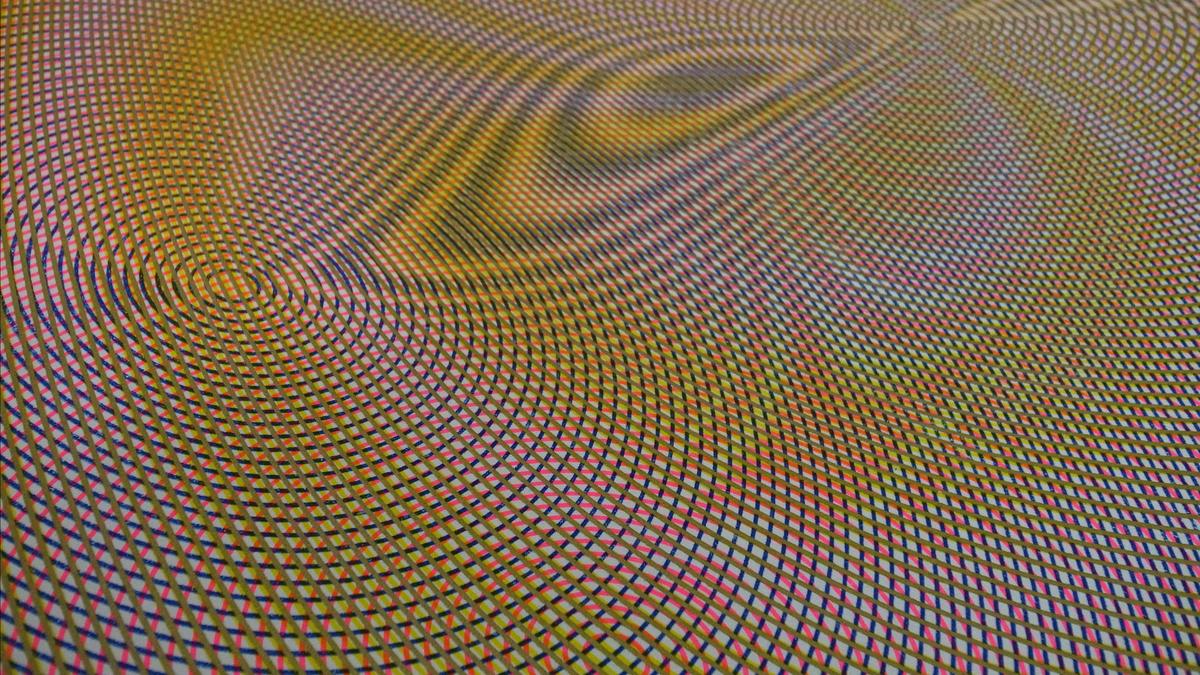
**Bengaluru, India (November 28, 2024)** – Researchers have achieved a breakthrough in the field of superconductivity, demonstrating a robust superconducting state in a twisted bilayer semiconductor material. The study, published in *Nature*, details the creation of a moiré material using tungsten diselenide (WSe₂), a semiconductor, by stacking two layers and twisting one by a small angle (3.65º). This creates a moiré pattern, altering the material’s electronic properties.
Unlike previous attempts with WSe₂, which yielded unstable superconducting states, this new approach resulted in a highly stable superconductor with a transition temperature around -272.93°C. This temperature is comparable to that of high-temperature superconductors, exceeding that of conventional superconductors. The superconductivity in this material, unlike in graphene-based moiré materials, is attributed to strong electron-electron interactions and half-band filling of electronic states, not flat bands and electron-lattice interactions.
The researchers observed that the superconducting state’s coherence length is ten times longer than in other moiré materials, indicating a more resilient superconducting state. Furthermore, the material exhibited a reversible transition between a superconducting state and a strongly correlated metallic state by modifying its electronic properties. This discovery offers new possibilities for developing stable, high-temperature superconductors based on semiconductor materials, opening avenues for advancements in various technological applications. The study emphasizes the importance of understanding the relationship between the moiré pattern, electronic structure, and emergent superconducting properties in these novel materials.
 First Piper