
Sat Nov 23 19:25:00 UTC 2024: ## Young Astronomer’s Courageous Correction of Kepler’s Calculations Leads to Historic Venus Transit Observation
**London, November 24, 2024** – A fascinating historical account reveals the extraordinary story of Jeremiah Horrocks, a 17th-century English astronomer who, despite humble beginnings and limited resources, dared to correct the calculations of the legendary Johannes Kepler and made history by being the first to record the transit of Venus.
Horrocks, born in 1618, was largely self-taught and faced significant obstacles in pursuing his passion for astronomy. He walked over 350km to attend Emmanuel College, Cambridge, working as a sizar to fund his studies. Leaving Cambridge without a degree, he became a tutor and later a curate, pursuing his astronomical studies with a self-acquired telescope. His dedication is reflected in a poem he wrote praising the instrument.
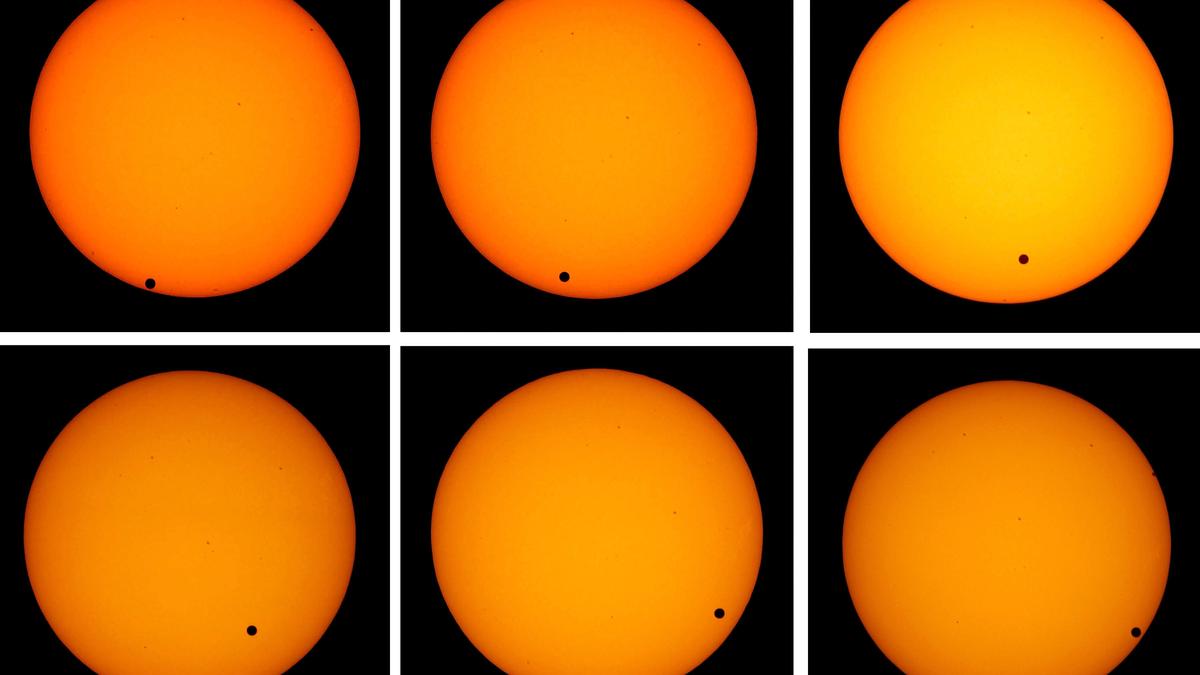
A prodigious talent, Horrocks made significant contributions to lunar theory, anticipating some of Isaac Newton’s later discoveries. However, his most celebrated achievement was his observation of the transit of Venus on November 24, 1639 (December 4th, Gregorian calendar). He identified an error in Kepler’s predictions, correctly calculating the event and sharing his findings with fellow astronomer William Crabtree. Their simultaneous observations from different locations provided crucial data.
Horrocks’s meticulous observation, made with a simple telescope and a sheet of marked paper, represents a landmark achievement in astronomy. Tragically, he died less than a year later at the age of 22, his work almost lost to the ravages of time and conflict. His manuscript, however, survived and was eventually published in 1662, securing his place in history as the first to witness and record this rare astronomical event. The transit of Venus, occurring in pairs with significant time gaps between, offers valuable insights into Venus’s atmosphere and composition. Horrocks’ story is a testament to the power of perseverance, courage, and the pursuit of scientific truth.
 First Piper