
Wed Nov 13 00:00:00 UTC 2024: ## Bacteria Become Bio-Computers: Scientists Engineer Microbes to Solve Mathematical Problems
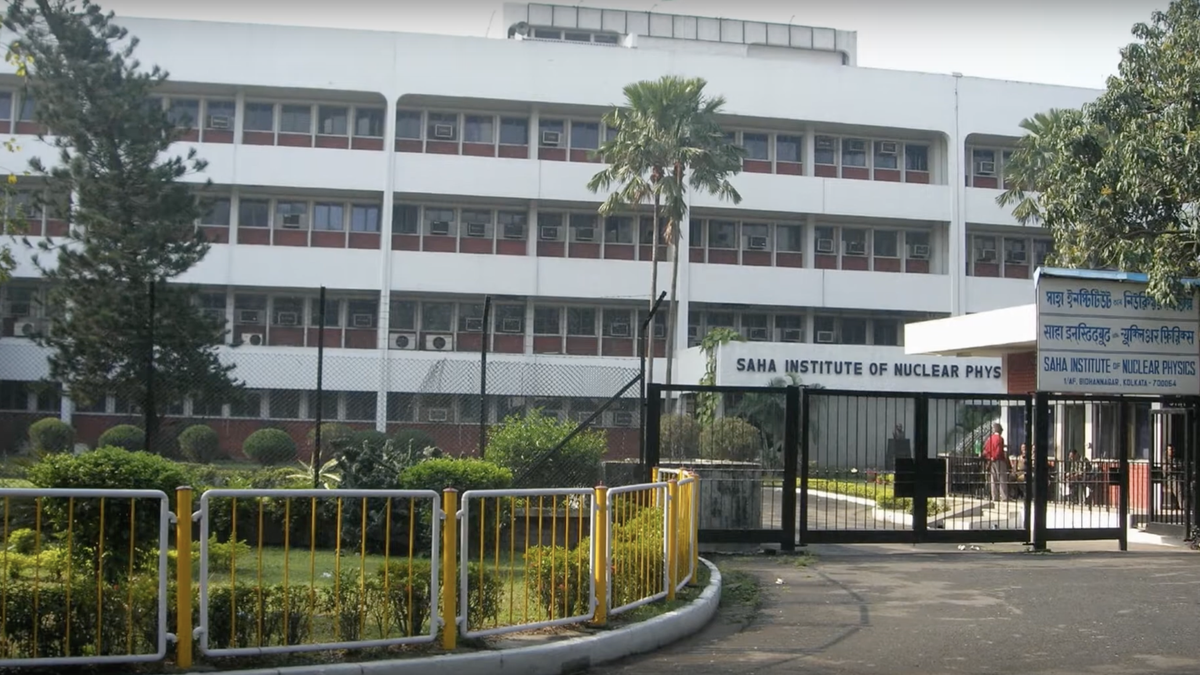
**Kolkata, India** – A team of researchers at the Saha Institute of Nuclear Physics has achieved a remarkable breakthrough in synthetic biology, engineering bacteria to perform complex mathematical calculations. This innovation, published in Nature Chemical Biology, pushes the boundaries of our understanding of intelligence and could have profound implications for the future of medicine, biomanufacturing, and computing.
Led by synthetic biologist Sangram Bagh, the team introduced “genetic circuits” into Escherichia coli bacteria. These circuits, activated by combinations of chemical inducers, allow the bacteria to function as “bactoneurons,” similar to the neurons in a human brain. By combining these bactoneurons, the researchers created bacterial “computers” capable of performing complex computations, including identifying prime numbers, determining if a number is a perfect power, and even solving optimization problems.
The team’s findings have garnered significant attention within the scientific community. Pawan Dhar, executive director of the C.V.J. Centre for Synthetic Biology and Biomanufacturing, believes these “biocomputers” could revolutionize healthcare by recognizing early cancer signals and facilitating targeted treatment. He envisions a future where microbes handle computational tasks, lessening our reliance on traditional silicon-based computers.
Bagh, however, is more focused on the implications for understanding intelligence itself. By creating these intelligent bacteria, his research challenges our traditional notion of intelligence, suggesting it may be possible in even the simplest of organisms.
This groundbreaking research is poised to impact various fields, potentially leading to a future where biological computers are as common as the silicon computers we use today. The implications for the pharmaceutical industry, medical sciences, and the biomanufacturing sector are vast and still being explored.
 First Piper