
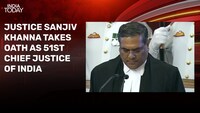
Tue Nov 12 01:46:32 UTC 2024: ## New Chief Justice of India Takes Helm, Facing Backlog and High-Profile Cases
**New Delhi, India** – Justice Sanjiv Khanna was sworn in as the 51st Chief Justice of India today, inheriting a daunting docket and a crucial role in shaping the future of the country’s judiciary. As the “Master of the Roster,” Khanna holds the power to allocate cases and form benches within the Supreme Court, a responsibility that will be closely watched for its impact on judicial efficiency and public trust.
Khanna inherits a backlog of over 82,000 pending cases, including complex matters that require special benches. Among these are several high-profile cases with significant constitutional, social, and legal implications, including:
* **Sedition Law:** The constitutionality of Section 124A, India’s sedition law, referred to a Constitution bench by former CJI Chandrachud, awaits Khanna’s decision on the timing and composition of the bench.
* **Sabarimala Temple Entry:** Challenges to the 2018 Sabarimala judgment, permitting women of all ages to enter the temple, will require Khanna’s guidance on balancing religious rights and gender equality.
* **Marital Rape:** The contentious issue of marital rape remains unresolved due to time constraints. Khanna’s bench allocation decision could have a significant impact on gender rights in India.
* **Election Commissioners Act:** The law empowering the executive to appoint election commissioners has been challenged for potentially contradicting a Supreme Court ruling on impartiality.
* **Caste-Based Survey:** The Bihar government’s initiative for a caste-based survey presents a politically sensitive legal battle, with Khanna overseeing its final stages.
* **Doctor Safety:** The open suo motu case concerning the rape and murder of a trainee doctor at Kolkata’s RG Kar Medical College and Hospital highlights concerns about healthcare professionals’ safety.
* **Enforcement Directorate Powers:** Challenges to the Enforcement Directorate’s powers under the Prevention of Money Laundering Act are among the other significant cases on Khanna’s roster.
Khanna’s approach to managing these cases will be key to his tenure. His decisions on bench allocation, prioritization of matters, and transparency in roster management will be observed closely by the public and legal community alike. His vision for the judiciary and commitment to fair hearings will be reflected in his case assignments, aiming to ensure efficient and equitable case administration.
Chief Justice Khanna’s early days in office will be crucial, setting the tone for his tenure and potentially establishing benchmarks for future Chief Justices. His choices will be scrutinized for their impact on judicial independence, efficiency, and public trust in the Supreme Court.
 First Piper