
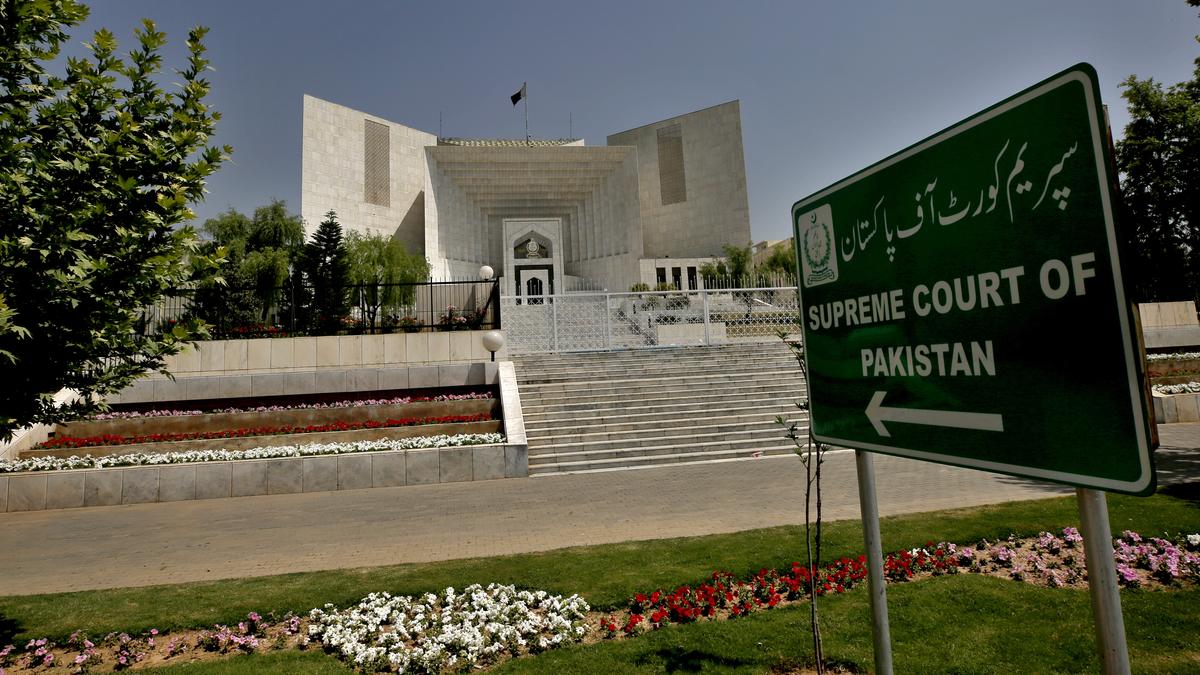
Sat Nov 02 05:04:07 UTC 2024: ## Pakistan Parliament Approves Controversial Bill to Increase Supreme Court Judges
**Islamabad, November 2, 2024:** The Pakistani Senate has approved a controversial bill to increase the number of judges in the Supreme Court from 17 to 25, despite strong opposition from opposition lawmakers. The bill, “The Supreme Court (Number of Judges) (Amendment) Act 2024,” was proposed by independent senator Abdul Qadir, citing the growing backlog of cases in the apex court.
The bill was approved by the Senate Standing Committee on Justice, despite objections from Pakistan Tehreek-e-Insaf (PTI) and Jamiat Ulema-e-Islam (JUI) parties. The opposition alleges that the government’s move is a tactic to “pack” the court with pro-government judges to influence cases against PTI leaders.
The government argues that the increase in judges is necessary to address the significant backlog of cases, currently standing at around 60,000. However, the opposition accuses the government of attempting to manipulate the judiciary through this move.
“This is called court-stacking,” said PTI leader Ali Zafar, highlighting that several countries have used this practice in the past to control the judiciary.
In a separate development, the government presented a controversial ordinance in the Senate, which gives the Chief Justice of Pakistan a dominant role in forming judicial benches. The Supreme Court (Practice and Procedure) (Amendment) Ordinance 2024, which was promulgated by President Asif Ali Zardari in September, has been referred to the relevant Standing Committee.
The ordinance significantly alters the composition of the committee that forms benches and assigns cases. It now includes the Chief Justice, the next most senior judge, and a third judge chosen by the Chief Justice. The ordinance also requires documentation of reasons for taking up cases under Section 184(3) of the Constitution, and removes the court’s ability to hear cases out of turn without clear justification.
These developments have raised concerns about the government’s intention to influence the judiciary and potentially undermine its independence. The opposition is likely to continue raising concerns about these measures and scrutinize the government’s actions during the upcoming legislative process.
 First Piper