
Sat Nov 02 18:52:00 UTC 2024: ## Micrographia: A Scientific Revolution in a Book
**London, November 3, 2024** – While works like Darwin’s “On the Origin of Species” and Newton’s “Principia” are widely celebrated for revolutionizing our understanding of the natural world, Robert Hooke’s “Micrographia” deserves a place among the most influential scientific publications. Released in 1665, this groundbreaking work not only made microscopy a popular field of study but also provided a wealth of detailed observations that captivated both scientists and the general public.
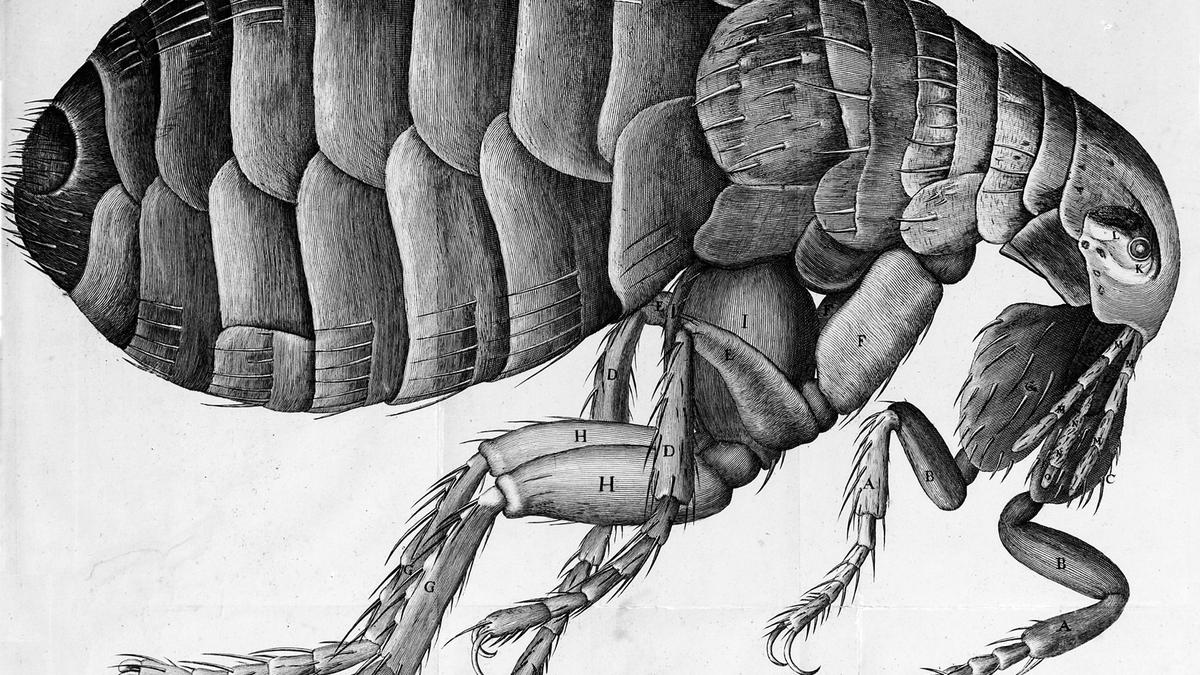
Hooke, a polymath with a remarkable breadth of skills, leveraged the then-novel microscope to explore the intricate structures of rocks, plants, and insects. His detailed drawings, inspired by his early training as an artist, were so meticulously crafted that they rival modern-day microscopic images. His book even coined the term “cell” in its biological context, forever changing our understanding of living organisms.
“Micrographia” became an instant bestseller, praised for its comprehensive data and stunning illustrations. Samuel Pepys, a prominent diarist and politician, called it “the most ingenious book that ever I read in my life,” and its impact even led him to purchase scientific instruments, join the Royal Society, and eventually become its president.
Though Hooke’s contributions to science are undeniable, he never achieved the same level of recognition as his contemporaries. However, his work undeniably paved the way for future scientific advancements, proving the power of experimental philosophy and expanding the limits of human knowledge.
Today, “Micrographia” remains a testament to Hooke’s legacy, available online through the Royal Society for anyone to explore its fascinating insights into the microscopic world. The book’s enduring influence continues to inspire new discoveries and remind us of the importance of curiosity and meticulous observation in scientific exploration.
 First Piper