
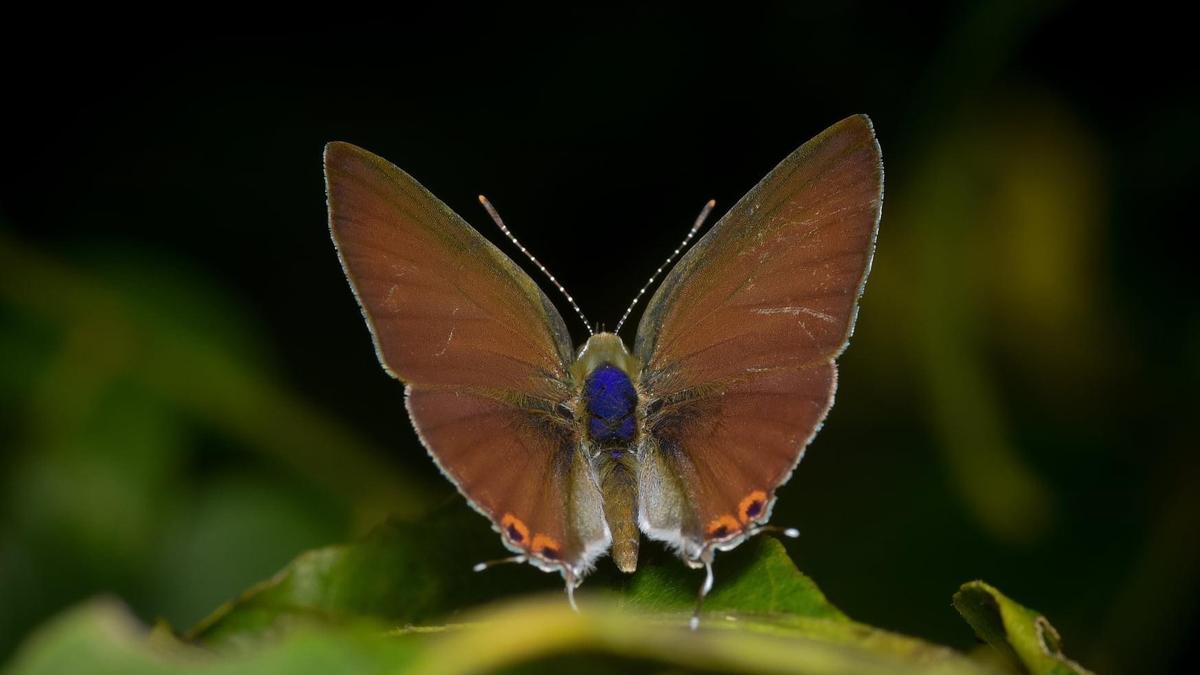
Mon Oct 21 14:04:52 UTC 2024: Published – October 21, 2024 07:34 pm IST – UDHAGAMANDALAMThe Nilgiri tit butterfly | Photo Credit: SPECIAL ARRANGEMENT
Butterfly enthusiasts from the Nilgiris have recorded for the first time in India, the Nilgiri tit (Hypolycaena nilgirica) utilising a large terrestrial orchid plant as a host. The study, which was conducted near the Kallar horticultural garden, it is hoped, will help preserve the habitat utilised by the rare, endemic butterfly that is classified under Schedule II of the Wildlife Protection Act.The findings of the study, conducted by Manoj Sethumadhavan, Felix Nirmal Dev, Vinod Sriramulu and Selvaraj Jeevith, are published in the scientific journal, “The Tropical Lepidoptera.”
First described in 1884 from Coonoor in the Nilgiris, it has since been recorded in Sri Lanka. “In India, until the late 1980s, the species was observed only from the foothills of the Nilgiris at Kallar by Wynter-Blyth (1944) and Larsen (1987), with a few records from Palanis (Larsen, 1987). However, since Larsen’s observations in the 1980s, many sightings have been registered from different regions of Western Ghats, including the Geddai slopes of Nilgiris district, Aiyannar Falls of Virudhunagar district, Anamalais of Coimbatore district and Kalakkad Mundanthurai Tiger Reserve of Tirunelveli district in Tamil Nadu, Chinnar Wildlife Sanctuary of Idukki district, and Silent Valley National Park of Palakkad district in Kerala,” the authors of the paper noted.
The Nilgiri tit was noted to lay its eggs on the inflorescence (complete flower head) of the larval host plant, Eulophia epidendraea, a terrestrial orchid species. This is the first known record of the butterfly using this particular species of plant as a host, they said. “This terrestrial orchid was found on rocky slopes in humid areas. In the study area, Eulophia epidendraea was mainly associated with grasses such as Cymbopogon flexuosus, Chrysopogon nodulibarbis, Melinis repens, among other floral species.
In a statement, the Wynter-Blyth Association said that the definitive larval host plant of the species has been published, with its members also having recorded the habitat of the species’ larval host plant, further contributing to better understanding the life cycle of the species. The members of Wynter-Blyth Association said that this “rare discovery will pave the way for further conservation studies of the species as well as its allied wild flora and fauna.”Published – October 21, 2024 07:34 pm IST
Copyright© 2024, THG PUBLISHING PVT LTD. or its affiliated companies. All rights reserved.
Terms & conditions | Institutional SubscriberComments have to be in English, and in full sentences. They cannot be abusive or personal. Please abide by our community guidelines for posting your comments.
We have migrated to a new commenting platform. If you are already a registered user of The Hindu and logged in, you may continue to engage with our articles. If you do not have an account please register and login to post comments. Users can access their older comments by logging into their accounts on Vuukle.
 First Piper