
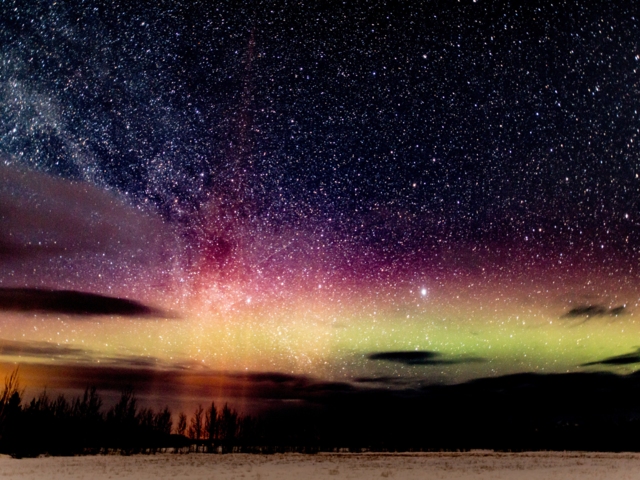
Fri Oct 11 16:52:16 UTC 2024: ## Northern Lights Dazzle UK Skies in Spectacular Display
**LONDON, UK -** The northern lights, or aurora borealis, painted the skies across the UK with vibrant colours last night, exceeding expectations and reaching far beyond the Midlands. The display, described by BBC Weather as one of the strongest since May, treated lucky skygazers to a breathtaking spectacle.
While solar activity is currently waning, there’s still a chance for those in northern areas to catch another glimpse of the aurora on Friday night.
This celestial phenomenon occurs when charged particles from the sun collide with Earth’s upper atmosphere. These particles, travelling at speeds of up to 72 million kph, are guided towards the Earth’s poles by the planet’s magnetic field. This interaction causes the atmosphere to glow in a dazzling array of colors, depending on the gases involved.
The intensity of auroras is linked to the sun’s 11-year cycle, which fluctuates between periods of low and high activity. As we approach the next solar maximum, anticipated between 2024 and 2025, we can expect more frequent and intense auroral displays.
For those hoping to witness this natural wonder, the best viewing location is within the auroral zone, approximately 1,550 miles from the North Pole. Ideal spots include Fairbanks (Alaska), Yellowknife (Canada), Tromsø (Norway), and various sites in Iceland. The optimal viewing time is between September and April, from 9pm to 3am.
While clear skies are essential, even moonlight can enhance the experience by illuminating the surrounding landscape.
Interestingly, auroras are not exclusive to Earth. They have been observed on planets like Jupiter and Saturn, thanks to their strong magnetic fields. Even Mars, despite its weaker magnetic field, exhibits its own unique types of auroras. Studying these celestial displays on other planets deepens our understanding of this mesmerizing phenomenon and reveals its presence throughout our solar system.
 First Piper