
Sat Oct 05 15:45:00 UTC 2024: ## Yellowjacket Activity on the Rise in Oklahoma
**By Randy Mitchell**
As the summer winds down and fall approaches, Oklahomans are likely to encounter more yellowjackets, according to local wildlife experts. The insects are becoming more active as their populations peak and food sources dwindle. While yellowjackets are generally not aggressive, their interactions with humans increase during this time, particularly when nests are disturbed or food supplies are scarce.
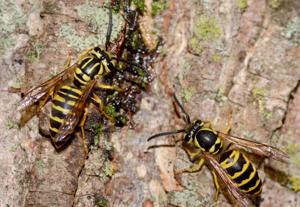
Freelance writer and photographer Randy Mitchell shared his observations about yellowjackets, noting an uptick in their activity and encounters. While he emphasizes that yellowjackets are not always aggressive, he cautions against disturbing their nests, which can lead to stings.
Mitchell describes a personal experience where he was stung multiple times by yellowjackets after disrupting a nest in his grandmother’s farm. He also shares a method he uses to attract yellowjackets with a sugary mash, allowing him to observe and photograph their behavior without being stung.
The article details three species of yellowjackets found in Oklahoma: the Southern Yellowjacket, the Eastern Yellowjacket, and the Bald-faced Hornet. The Southern Yellowjacket, the focus of the article, is distinguished by two yellow stripes on its black thorax.
Mitchell highlights the importance of yellowjackets as pollinators and predators in the ecosystem. He describes witnessing a Southern Yellowjacket attack a cicada, emphasizing the role of these insects in controlling other populations.
The article concludes by explaining the lifecycle of the Southern Yellowjacket, starting with a pregnant queen emerging from hibernation and building a nest where she lays eggs. Workers then take on the tasks of collecting food and building the nest, while the queen focuses on laying eggs.
The article serves as a reminder to Oklahomans to be aware of the increased activity of yellowjackets during the late summer and fall. While these insects are beneficial to the ecosystem, it is important to respect their space and avoid disturbing their nests to prevent stings.
 First Piper