
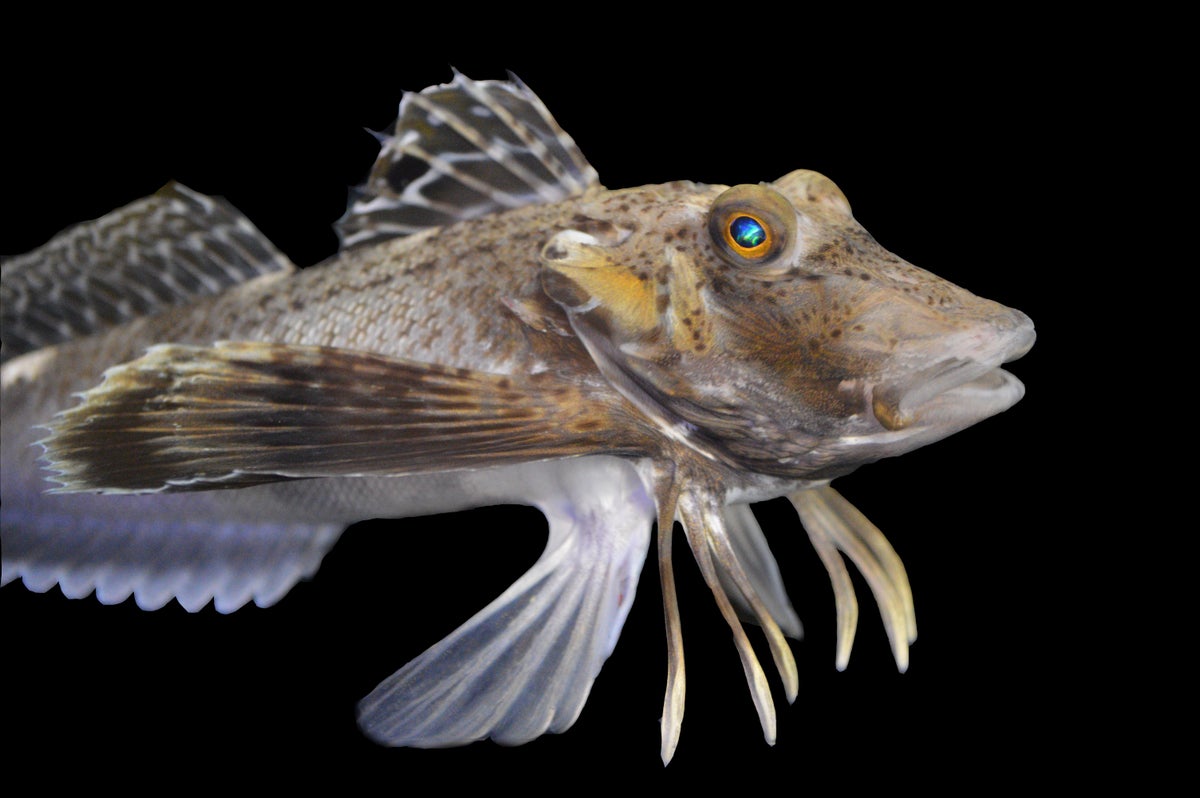
Thu Sep 26 15:00:00 UTC 2024: ## Sea Robin: The Fish That Walks on Six Legs and Tastes its Prey
**Woods Hole, MA -** A team of researchers has uncovered fascinating insights into the evolution of new animal traits by studying a peculiar species of fish called the sea robin. This unique creature walks on six legs and uses taste receptors to locate hidden prey, offering a remarkable example of how evolution can repurpose existing mechanisms to create novel functionalities.
Led by David Kingsley of Stanford University and Nicholas Bellono of Harvard University, the researchers have published two studies in Current Biology detailing their findings. The studies revealed that sea robins have developed taste sensors in their legs, allowing them to detect buried prey like mussels. These sensors are not traditional taste buds but utilize familiar taste receptor molecules in a novel configuration.
Furthermore, the researchers pinpointed a specific gene, tbx3a, responsible for the development of the sea robin’s legs. By manipulating this gene, they could revert the legs back into fin-like structures, demonstrating the gene’s crucial role in the evolution of this unique trait.
The research underscores the power of repurposing existing genetic tools for evolutionary development. “You build new traits using old friends,” says Kingsley, highlighting the sea robin’s innovative use of familiar gene sets to create novel adaptations.
The research has also garnered attention from other scientists for its multi-faceted approach, encompassing genetics, anatomy, and behavior. This comprehensive approach offers a promising blueprint for understanding the emergence of new traits across diverse organisms.
This groundbreaking research not only provides deeper insights into the evolutionary process but also opens new avenues for understanding the biology of sea robins. The discovery of the sea robin’s unique prey-sensing mechanism and the identified gene responsible for its leg development have significant implications for future research into the evolution of animal diversity and the remarkable plasticity of the natural world.
 First Piper