
Thu Sep 26 13:29:18 UTC 2024: ## Tiny but Mighty: Hummingbirds Reveal Surprising Adaptations to Extreme Lifestyles
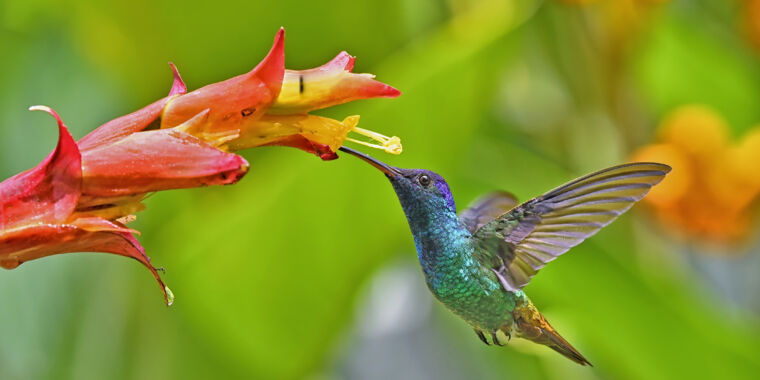
Hummingbirds, the tiny, brightly colored marvels that dart through gardens, have long captivated observers. But scientists are increasingly fascinated by the remarkable adaptations that allow these birds to thrive in a world of extreme challenges. From their nearly all-sugar diet to their ability to enter a state of suspended animation at night, hummingbirds showcase a level of physiological resilience unmatched by other birds.
Recent research has revealed that hummingbirds spend much more time feeding than previously thought, especially when nectar is scarce. To conserve energy, they can enter a state of torpor, lowering their body temperature to just above freezing, a process that can save them up to 95% of their metabolic costs during cold nights.
The birds’ high-sugar diet also poses unique challenges. Their leaky guts allow them to absorb sugar rapidly, preventing it from causing digestive upset. However, this leaves them with blood sugar levels six times higher than those seen in humans, potentially leading to glycation, a process linked to diabetes complications. Researchers are investigating how hummingbirds manage to avoid these issues, potentially offering insights for managing diabetes in humans.
Hummingbirds also face metabolic challenges when transitioning from their sugar-based diet to a fat-burning state during their nightly fast. They have evolved to be remarkably efficient at switching between these metabolic modes, a feat that happens in minutes. This remarkable ability holds potential for understanding and manipulating fuel use in humans.
Beyond their metabolic wonders, hummingbirds also display amazing adaptations for high altitude living. The giant hummingbird, for example, can live at elevations exceeding 14,000 feet. To cope with the thin air, they have evolved blood rich in hemoglobin, allowing them to carry more oxygen. Researchers have also discovered that some giant hummingbird species undertake long migrations, gradually ascending to higher altitudes and pausing to acclimatize, similar to human mountaineers.
While researchers continue to uncover the secrets of hummingbird physiology, conservation efforts are increasingly urgent. Their populations are declining throughout the Americas, highlighting the need for actions such as planting hummingbird-friendly flowers, reducing pesticide use, and preventing window collisions.
Hummingbirds offer a fascinating window into the extraordinary adaptations that can be found in nature. Further research promises to unlock more secrets, potentially leading to new solutions for human health and a deeper understanding of these remarkable birds.
 First Piper