
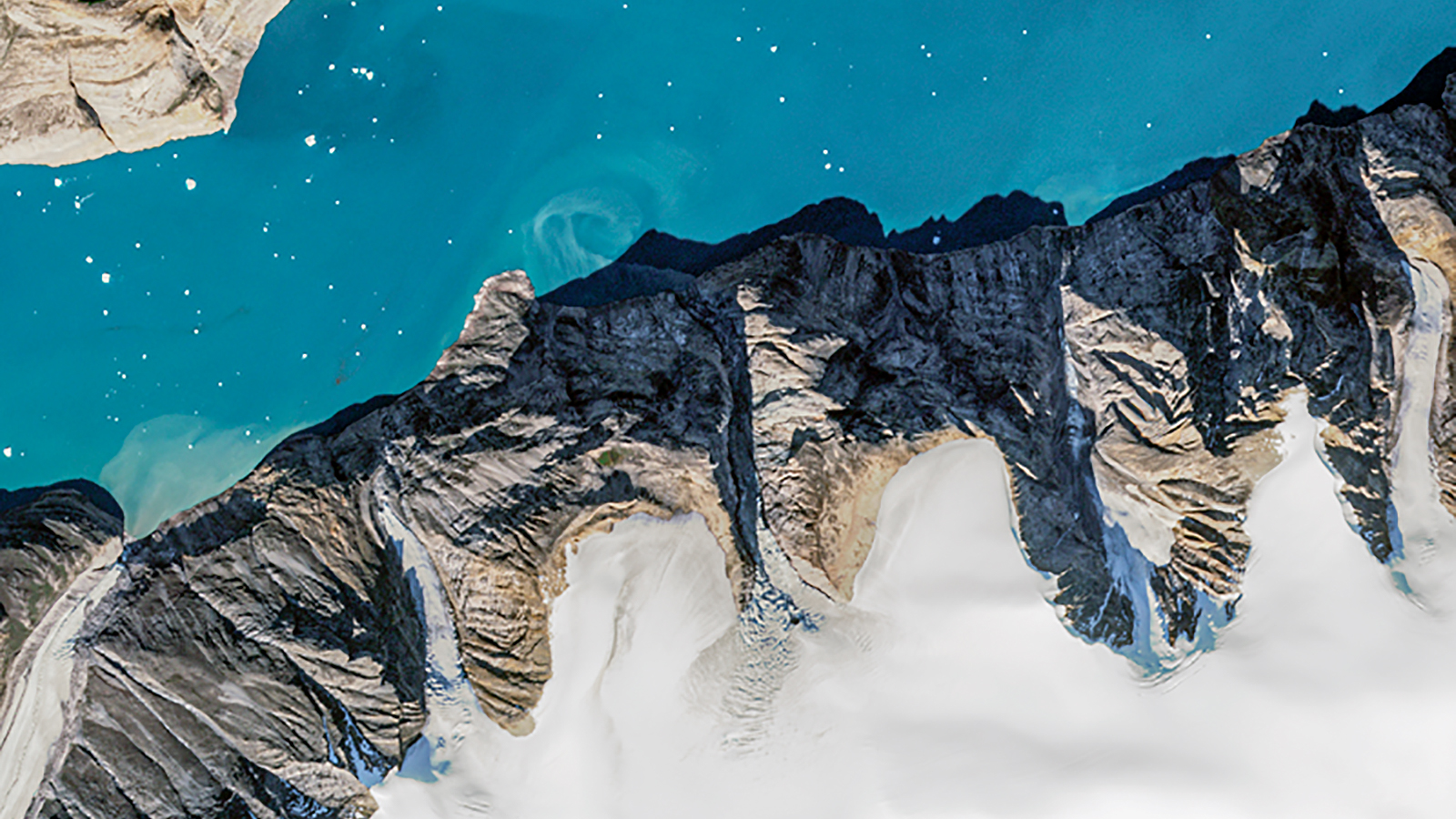
Wed Sep 25 08:30:00 UTC 2024: ## Greenland Glacier Collapse Triggers Global Vibrations, Highlighting Climate Change Impacts
**A recent study published in Science reveals that a massive glacier collapse in East Greenland last September triggered a 650-foot tsunami, sending seismic waves around the world for nine days.** The event, which has never been recorded in this region before, is a stark warning of the accelerating impacts of climate change on the planet’s largest ice sheets.
The study, conducted by an international team of 68 scientists, concluded that human-induced global warming is responsible for the collapse. Decades of greenhouse gas emissions have led to increased melting of the Greenland ice sheet, destabilizing the region and creating conditions conducive to such events.
**The research confirms a trend of increasing melt days and more intense melting events in Greenland, with the frequency of extreme melt days doubling since 1950.** Another study by the University of Barcelona found that these extreme events, characterized by hot, stagnant air, are responsible for roughly 40% of the ice Greenland loses each year.
**The article highlights the phenomenon of Arctic amplification, where the Arctic region is warming at four times the rate of the rest of the planet.** This is largely attributed to the loss of sea ice, which acts as a reflective surface, reducing the amount of heat absorbed by the ocean. As sea ice melts, the ocean absorbs more heat, further amplifying the warming trend.
**The article emphasizes the self-perpetuating nature of the melting process, warning that the Greenland ice sheet will continue to destabilize until the damage is irreversible.** This will lead to further sea level rise, posing significant threats to coastal communities around the world.
**The article concludes by calling for immediate action to address climate change and prevent further damage to the planet’s ice sheets.** It also emphasizes the need for adaptation measures to mitigate the impacts of rising sea levels, particularly in coastal regions.
 First Piper