
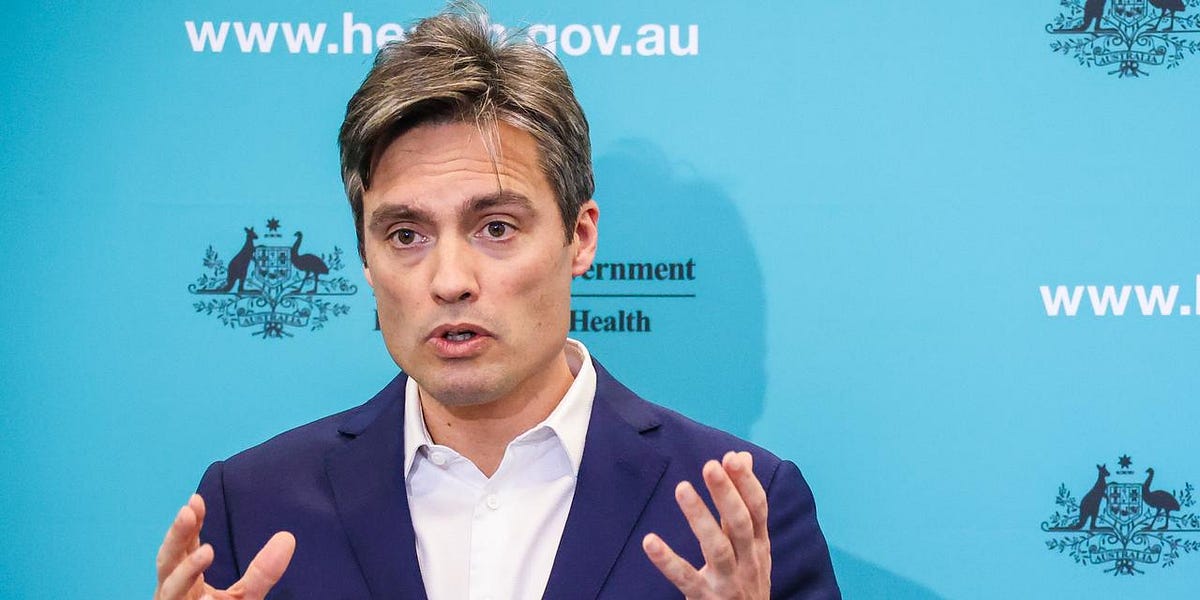
Wed Sep 25 07:59:26 UTC 2024: ## Australian Doctor Condemns “Weaponization” of Misinformation, Calls for Rejection of Government’s Bill
**Sydney, Australia** – Dr. Nick Coatsworth, a prominent Australian physician and former senior health official, has issued a scathing critique of the Australian government’s proposed misinformation bill, urging its complete rejection. Dr. Coatsworth, known for his role in Australia’s COVID-19 response, argues that the bill will stifle legitimate debate and suppress truthful information under the guise of combating misinformation.
The bill, aimed at mitigating the harms of misinformation and disinformation, would require digital platforms to demonstrate their ability to identify and prevent the spread of harmful content. Failure to do so could result in hefty fines of up to 5% of their global revenue. Dr. Coatsworth, however, warns that the bill’s broad definition of “serious harm” could be used to silence dissenting voices and legitimate concerns about public health policies.
He cites the example of the COVID-19 pandemic, where scientific understanding evolved over time, and genuine questions about public health measures were often branded as misinformation. “Misinformation causes harm,” Dr. Coatsworth states, “but the weaponization of misinformation as a term to shut down debate causes even greater harm. This bill does the latter.”
Dr. Coatsworth also raises concerns about the bill’s reliance on “credible and trusted news sources,” “fact-checkers,” and “official authorities” as arbiters of truth. He points out that these entities are not infallible, and have historically promoted misinformation themselves.
For example, the World Health Organization (WHO) initially downplayed the role of airborne transmission of COVID-19, a fact later confirmed by scientific evidence. Dr. Coatsworth himself acknowledges participating in spreading this misinformation during the early stages of the pandemic.
He argues that suppressing true information, even unintentionally, can have severe consequences. This includes potentially hindering public health efforts by preventing the dissemination of vital information about disease transmission, vaccine efficacy, and potential side effects.
Dr. Coatsworth advocates for a more nuanced approach to misinformation, emphasizing critical thinking and media literacy education rather than censorship. He also highlights the potential of social media platforms to promote constructive conversation and truth-seeking through features like Community Notes and “read before re-sharing” prompts.
The Australian government’s misinformation bill has faced criticism in the past, and its current iteration is expected to face similar challenges. Dr. Coatsworth’s statement underscores the importance of a balanced approach to addressing misinformation, one that safeguards freedom of expression while promoting media literacy and informed public discourse.
 First Piper