
Wed Sep 25 08:55:27 UTC 2024: ## World War II Reshaped America’s Housing Landscape, Leaving a Legacy of Segregation and Inequality
**New York, NY** – A new book, “Abolish Rent,” reveals how World War II fundamentally altered the American housing landscape, laying the groundwork for the racial and economic disparities we see today.
The war’s industrial boom drew millions of Black Americans to urban centers, seeking employment opportunities. Simultaneously, the US government’s guest-worker programs spurred immigration from Latin America. However, these new residents faced stark segregation, with limited access to housing, often relegated to overcrowded, dilapidated apartments in undesirable areas.
The war effort’s need to stabilize working populations led to the introduction of rent control, a temporary relief that proved short-lived. As landlords pressured for its removal, conservative forces, fueled by racism and anti-communist sentiment, successfully lobbied against public housing initiatives.
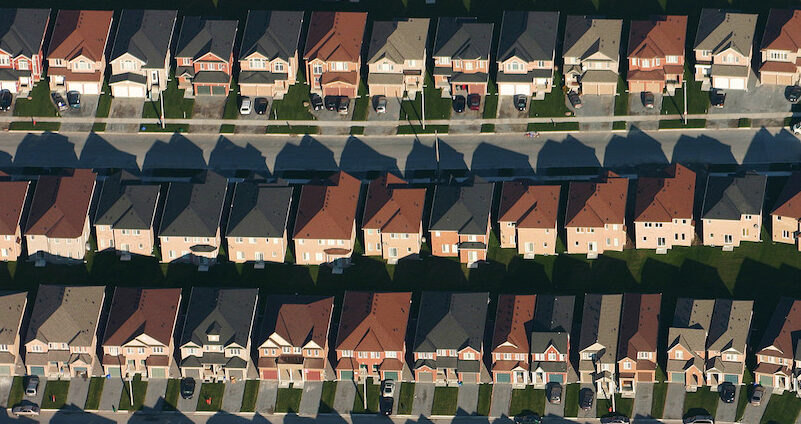
Postwar economic recovery centered around homeownership, propelled by the GI Bill, which subsidized white flight to newly developed suburbs. This mass exodus of white residents from urban centers was further facilitated by a practice known as “blockbusting,” where real estate agents exploited racial fears to drive down property values and profit from selling to Black families at inflated prices.
Suburbanization left behind a hollowed-out urban landscape, with deteriorating housing conditions and a concentration of poverty and inequality in Black and Brown communities. This legacy of housing discrimination was solidified by the 1949 Housing Act, which despite its promises of affordable housing, ultimately empowered local governments to demolish existing housing and clear land for private development.
This displacement of residents, often carried out through discriminatory tactics, led to the uprisings of the late 1960s, fueled by poverty, police brutality, and housing inequality. The Kerner Commission, tasked with identifying the root cause of the riots, concluded that “white society is deeply implicated in the ghetto,” noting the systematic disenfranchisement of Black and Brown communities through housing practices.
The book argues that this historical context sheds light on the ongoing housing crisis, highlighting the deep-rooted systemic inequalities that continue to disadvantage marginalized communities. The authors urge action, advocating for the abolition of rent and the creation of a more equitable and just housing system for all Americans.
 First Piper