
Mon Sep 23 22:00:00 UTC 2024: ## Black Holes: Not Scary Cosmic Vacuum Cleaners, but Still Mysterious
**Despite their menacing reputation, black holes are not the terrifying monsters of science fiction, but rather fascinating objects with complex properties and ongoing mysteries, according to a recent article by The Conversation.**
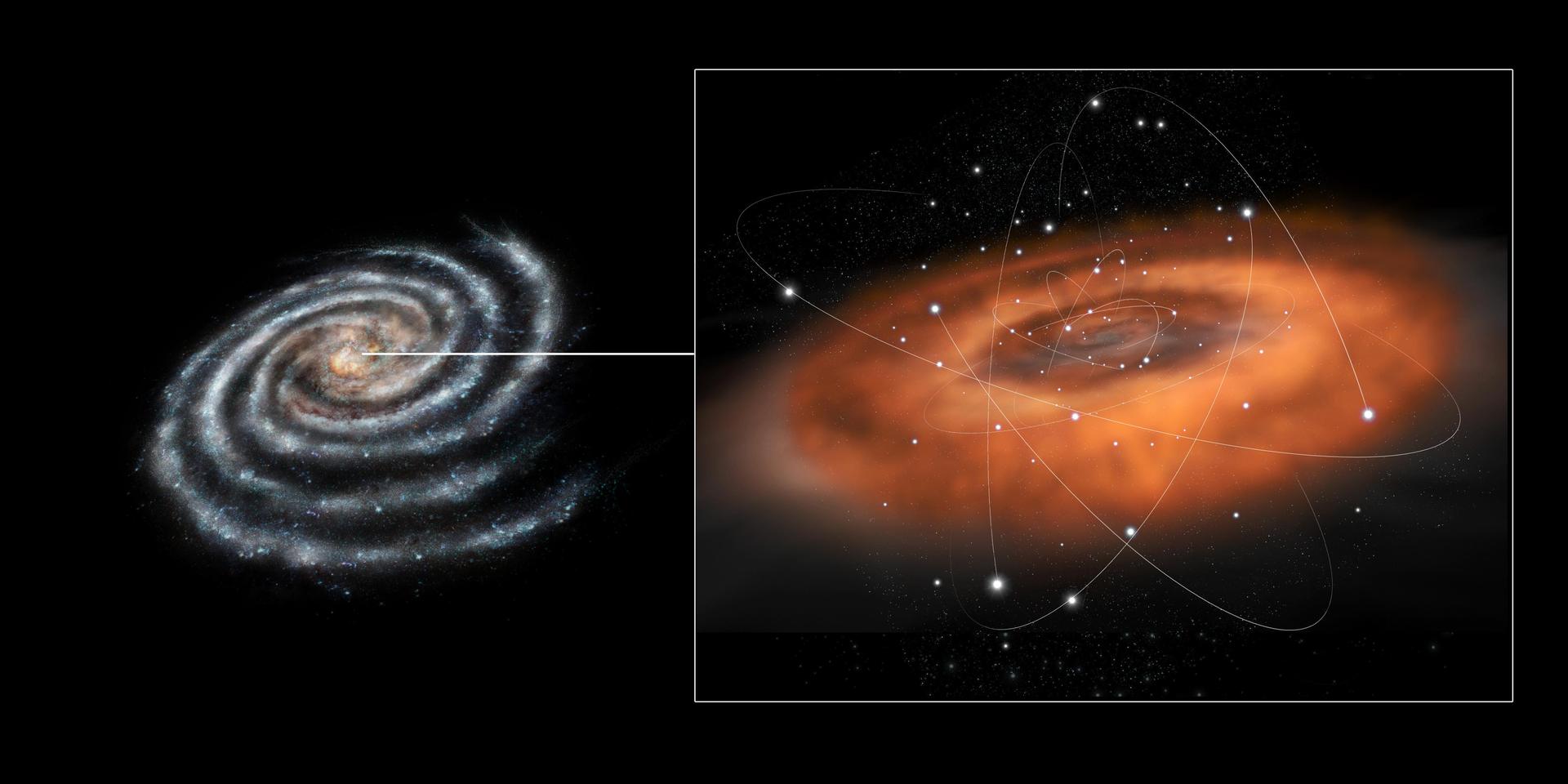
While considered a mathematical possibility for decades, the first black hole, Cygnus X-1, was discovered in 1971. Since then, scientists have learned that black holes are common throughout the universe, with supermassive black holes like Sagittarius A* residing at the center of most galaxies.
Black holes aren’t actually holes, but rather regions of extremely dense matter where gravity is so strong that not even light can escape. They are characterized by a bright ring of light, known as the accretion disk, that forms from the swirling matter around them.
Contrary to popular belief, black holes won’t swallow up everything in their path. Our sun, if replaced with a black hole of equal mass, would still be orbited by the planets in our solar system. However, it would be much colder.
One intriguing aspect of black holes is the “spaghettification” that occurs when matter crosses the Event Horizon. The extreme gravity stretches and squeezes the matter into a long, thin shape, like a noodle.
Despite their gravitational pull, celestial bodies can safely orbit black holes. However, a star that comes too close can be torn apart by the black hole’s gravity in an event called a tidal disruption.
Black holes are identified through various imaging techniques, such as x-ray and ultraviolet observations, and the detection of gravitational waves generated when black holes merge.
Scientists are still exploring how these massive black holes form at the center of galaxies. One technique for finding them is by observing the fast orbits of stars around an invisible object, indicating the presence of a black hole with strong gravity.
While the black hole at the center of our Milky Way poses no threat to our solar system, rogue black holes moving through space are being tracked. Future telescopes, like the Nancy Grace Roman Space Telescope, will detect these black holes by observing the warping of starlight as it passes near them.
**This article offers a fascinating glimpse into the ongoing exploration of black holes, showcasing their complex nature and the many mysteries that still surround them.**
 First Piper