
Sun Sep 15 12:32:13 UTC 2024: ## Tiny Monkeys, Big Discovery: Marmosets Found to Use Names, Just Like Humans
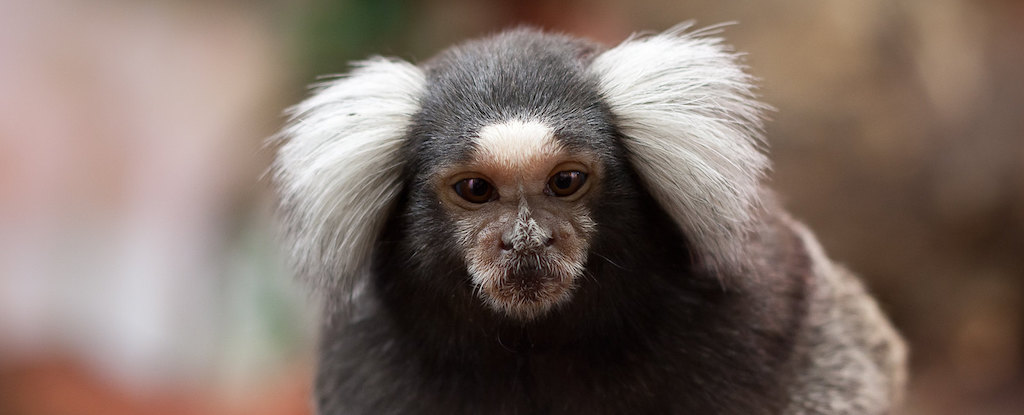
A new study published in Science has revealed that marmosets, small monkeys native to South America, have a sophisticated communication system that includes using unique vocalizations to “name” each other. This finding is significant as it marks the first time a naming system has been documented in a primate outside of humans, elephants, and dolphins.
Researchers from the Hebrew University of Jerusalem studied marmoset troops in their natural habitat, analyzing their vocalizations, specifically “phee calls,” which are used for communication and contact. They discovered that these calls are not only used to identify individuals but also to address them by name.
The study revealed that marmosets use distinct phee calls to label each other, and these calls are consistently used to represent specific names. Interestingly, these calls share some similarities with human speech, including the use of vocal labels and regional variations in pronunciation.
The researchers observed that marmosets learn names from each other within their troops, even across generations and among unrelated individuals. This suggests that the naming system is a social learning process, similar to how humans acquire names and dialects.
The study’s authors believe that this complex communication system, including the ability to use names, could be an adaptation to the challenging environment of the rainforest canopy where visibility is limited. The ability to identify individuals through vocalizations could help maintain social bonds and group cohesion, even when individuals are separated.
This discovery not only sheds light on the sophisticated social lives of marmosets but also offers a fascinating glimpse into the evolution of communication in primates. The similarities between marmoset and human social structures and communication strategies suggest that these abilities may have evolved in response to similar challenges faced by our early ancestors.
 First Piper