
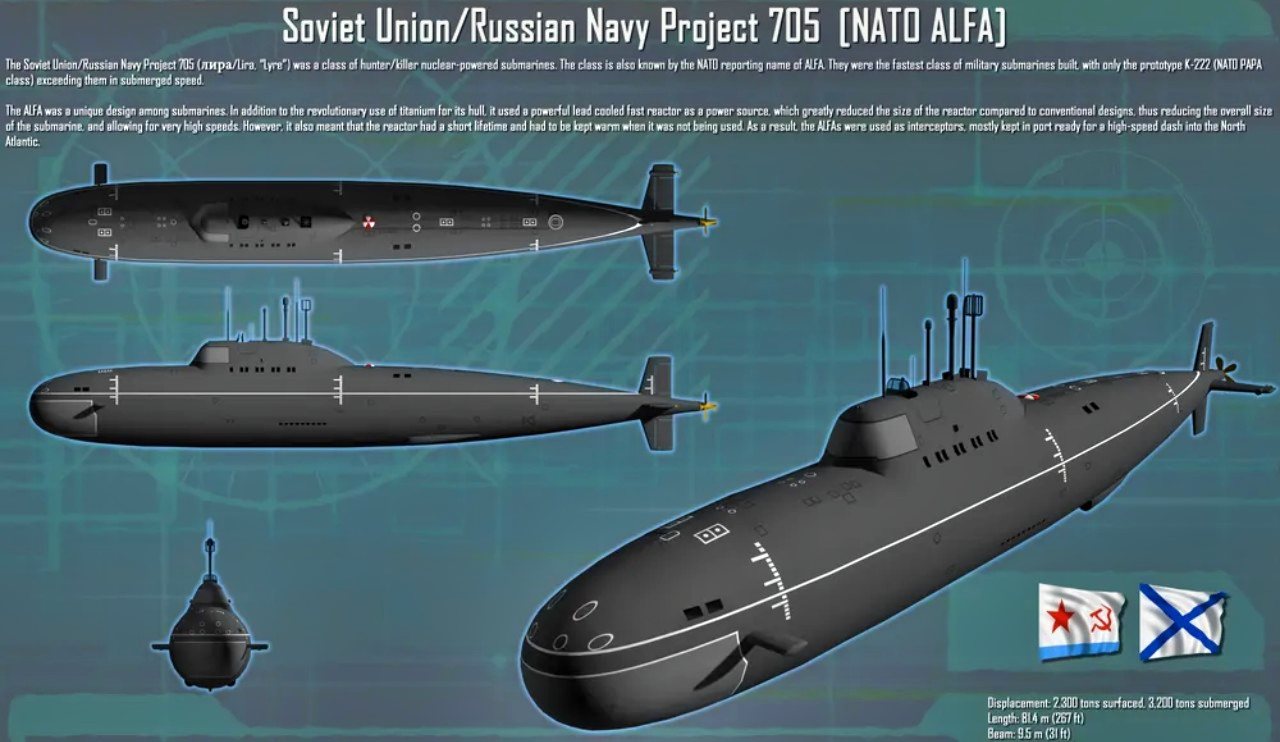
Mon Sep 09 15:56:34 UTC 2024: ## Soviet Alfa-class Submarine: A Speed Demon With Fatal Flaws
The Soviet Union’s Alfa-class submarine, developed during the Cold War, was a marvel of engineering, boasting record-breaking speed and deep diving capabilities thanks to its titanium hull and unique lead-bismuth-cooled reactor. However, this innovative design came with significant drawbacks.
Despite being the fastest submarine of its time, the Alfa-class faced numerous problems. Its noisy operation, complex maintenance, and radiation risks to the crew made it a dangerous vessel. The lead-bismuth reactor, while allowing for high speeds, produced polonium-210, a radioactive element that posed significant health hazards to the crew.
The most notable incident involving the Alfa-class was the 1972 reactor failure on the lead boat, K-64. The failure resulted in the submarine being mothballed, effectively ending its operational career.
The Alfa-class’s titanium hull, while strong and lightweight, was also susceptible to cracking, requiring complex welding techniques and further adding to the maintenance burden. These submarines also suffered from high internal temperatures, creating uncomfortable and potentially dangerous working conditions for the crew.
Despite its flaws, the Alfa-class remained in service for over 30 years, posing a threat to NATO forces. While it was a testament to Soviet ingenuity, the Alfa-class submarine ultimately proved to be a victim of its own ambition, highlighting the trade-offs between innovation and practicality.
 First Piper