
Tue Sep 10 14:38:00 UTC 2024: ## New Treatment Offers Hope for Gastric Cancer Patients
**Singapore, September [Date]** – A groundbreaking new treatment approach for gastric cancer, combining novel chemotherapy delivery and immunotherapy, has shown promising results in a recent clinical trial. This development could significantly improve survival rates for patients whose cancer has spread to the peritoneum, a protective membrane surrounding the abdominal cavity.
The study, led by researchers from the National University Hospital (NUH), National University Cancer Institute, Singapore (NCIS), and other leading institutions, involved 18 patients and demonstrated the safety and potential of this innovative therapy.
**Spraying Chemotherapy Directly to the Source**
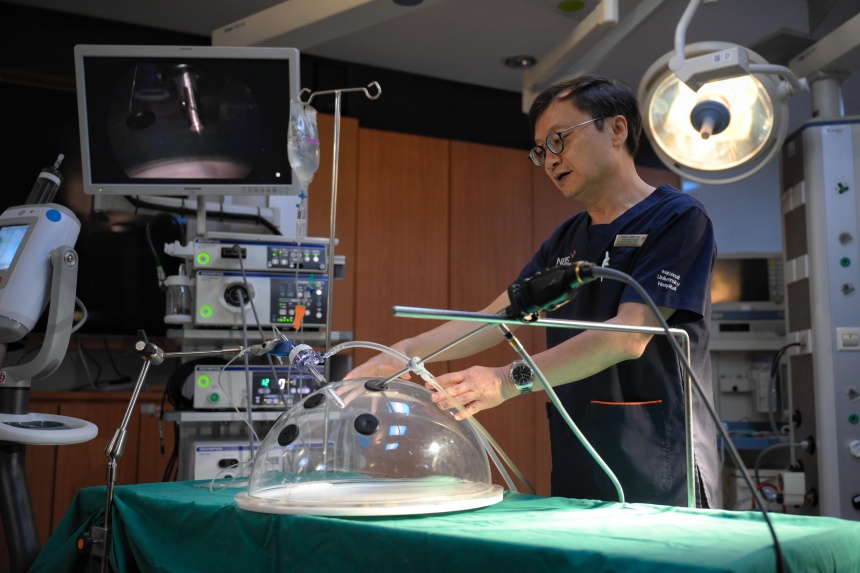
The treatment involves using a nebulizer, a machine that transforms liquid medication into a mist, to deliver chemotherapy drugs directly into the peritoneal cavity via a keyhole procedure. This method bypasses the protective membrane, allowing the drugs to reach and target cancer cells more effectively.
**Immunotherapy Boosts the Body’s Defence**
Simultaneously, immunotherapy is administered through the bloodstream, further strengthening the body’s natural defenses against the cancer. This combination approach aims to halt the spread of cancer cells and enhance the overall treatment outcome.
**Understanding the Spread of Cancer**
The study also delved into the intricate mechanisms behind the spread of gastric cancer to the peritoneum. Researchers analyzed a large collection of patient samples using cutting-edge genomic technology, identifying specific genetic alterations and characteristics within the tumor microenvironment (TME) that contribute to the spread of the disease.
This research provides valuable insights into the complex interplay between the primary tumor and its surrounding environment, paving the way for more personalized treatment strategies.
**A Beacon of Hope for Patients**
“Gastric cancer remains a formidable disease, with limited treatment options for advanced stages,” said Dr. Raghav Sundar, lead researcher. “This new treatment approach could provide a much-needed lifeline for patients whose cancer has reached the peritoneum.”
The teams are now working to secure funding for phase two clinical trials, with the aim of enrolling more patients globally to further validate the efficacy of this promising treatment.
**This research represents a significant leap forward in the fight against gastric cancer and offers new hope for patients facing this challenging disease.**
 First Piper